


[section id="selling-privately-how-it-works" format="ol"]
Selling privately - how does it work?
Selling your car privately in Australia usually means advertising it yourself, dealing directly with potential buyers, and handling the entire process from start to finish. Typically, you’ll:
- Prepare your car for sale by cleaning it thoroughly, gathering your service history, and ensuring it’s roadworthy.
- List your car online through platforms such as Carsales, Gumtree, or Facebook Marketplace, including photos, a description, and an asking price.
- Communicate with buyers — answering questions, arranging inspections, and allowing test drives.
- Negotiate the price until both you and the buyer agree.
- Finalise the paperwork, which includes signing the transfer of ownership, cancelling or transferring registration, and handling the payment securely.
This method often appeals to sellers who want to set their own price and deal directly with buyers, but it does require time, effort, and some risk management.
[section_inner_1 id="pros-of-private-sales" format="ul"]
Pros of private sales
Selling your car privately in Australia often gives you the best chance of securing a higher sale price than dealerships or car buying services. Because you’re dealing directly with buyers, there’s no middleman taking a cut. Other advantages include:
- Control over the price: You set the asking price and have room to negotiate based on the value of your car.
- Wider pool of buyers: Online platforms let you reach thousands of people actively searching for a car for sale.
- Flexibility: You decide when and where to meet potential buyers and how quickly you want to sell your car.
- Potentially better returns: A private sale is a good way to get closer to market value if your car is in good condition.
For sellers willing to invest the time, selling privately can maximise the return on their vehicle.
[/section_inner_1]
[section_inner_1 id="cons-of-private-sales" format="ul"]
Cons of private sales
While selling your car privately in Australia can help you get the best price, it also comes with several drawbacks that are important to consider:
- Time-consuming: Preparing your car for sale, creating an online listing, responding to enquiries, and arranging inspections can take weeks or months.
- Risk of unreliable buyers: Private sales may attract tyre-kickers, no-shows, or buyers who back out at the last minute.
- Safety concerns: Meeting strangers for test drives or inspections can carry personal risk if not handled carefully.
- Uncertain payments: Unlike a dealership or car buying service that pays instantly, private sales require you to manage the payment process and ensure safe funds are clear.
- Extra responsibility: You’re responsible for all the paperwork, including the transfer of registration, proof of ownership, and ensuring the transaction is legal.
For many sellers, these disadvantages outweigh the potential higher price, especially if time and convenience are a priority. Learn more about how to sell your car safely.
[/section_inner_1]
[/section]
[section id="legal-requirements-private-sale" format="overview"]
What are the legal requirements for selling a car privately?
If you decide to sell your car privately in Australia, you must follow certain legal steps to ensure the sale is valid and protected. While rules differ by state, the process generally looks like this:
[section_inner_1 id="before-the-sale" format="checklist"]
Before the sale
- Check roadworthy requirements – In most states, you’ll need a roadworthy or safety certificate before advertising your car.
- Prepare your documents – Collect your ID proof, current registration papers, and your car’s service history.
- Ready the car: Clean, fix minor issues, and make it safe for inspection.
[/section_inner_1]
[section_inner_1 id="during-the-sale" format="checklist"]
During the sale
- Agree on the price – Confirm the sale amount with the buyer and ensure they have a secure payment ready.
- Complete the transfer form – Fill out the relevant state transfer of registration document with the buyer.
- Issue a receipt: Include buyer/seller details, VIN, date, and agreed price.
[/section_inner_1]
[section_inner_1 id="after-the-sale" format="checklist"]
After the sale
- Hand over the paperwork – Give the buyer the signed transfer form, roadworthy certificate (if required), and the receipt.
- Notify your state authority – Submit a notice of disposal so you’re no longer responsible for fines, tolls, or future liabilities.
- Cancel or update accounts – Remove toll tags, cancel insurance, and finalise any direct debit accounts linked to the vehicle.
Following these steps protects you and the buyer, ensuring the sale is legal and hassle-free.
[/section_inner_1]
[/section]
[section id="dealership-options" format="overview"]

What are your dealership options?
Australians traded in nearly 500,000 vehicles at dealerships in 2023, so if you’re considering selling a car to a dealer, you’re not alone. The first is approaching a franchise car dealership, usually the brand that initially sold your vehicle. These dealerships often accept trade-ins when buying a new or used car from them, making the process convenient and straightforward. However, they may not always offer the best price because they focus on moving stock and maintaining margins.
Another option is selling to a used car dealer. Independent second-hand dealers are usually open to buying a wide range of vehicles, regardless of brand. They may be more flexible than a franchise, and the process is generally quicker than arranging a private sale. Still, because dealers need to resell at a profit, the amount you get will likely be lower than selling privately.
Both dealership paths offer speed and ease, making them a common choice for people who want to sell their car without the effort of advertising or negotiating with multiple buyers.
[section_inner_1 id="selling-to-franchise" format="overview"]
Selling back to the same brand (franchise dealers)
One common dealership option is selling your car to the same brand through a franchise car dealership. This often happens when trading your current vehicle for a new or used car from the same manufacturer. The process is usually straightforward; the dealer inspects your vehicle, makes an offer, and deducts the agreed value from the cost of your next purchase.
The main appeal of this method is convenience. You avoid the hassle of advertising or negotiating with private buyers, and the transaction is completed in one place. However, it’s essential to understand that dealers must resell your car at a profit. This usually means your price will be lower than you might achieve through a private sale or a dedicated car-buying service.
For drivers planning to upgrade within the same brand, selling back to a franchise dealer can be a simple way to move on quickly.
[/section_inner_1]
[section_inner_1 id="selling-to-used-dealer" format="ol"]
Selling to a second-hand car dealer
Another dealership pathway is selling directly to a second-hand car dealer, unlike franchise dealerships, which focus on a single brand. Used car dealers buy and sell a wide range of makes and models. The process is generally quick: the dealer inspects your car, makes an offer on the spot, and handles most of the car paperwork for you.
This option is appealing for people who want to sell a car to a dealer without trading it in for a new vehicle. It’s especially useful if your car is older or out of warranty, as independent dealers are often more flexible about the condition of vehicles they accept.
Here’s how selling to a second-hand car dealer usually works:
- Visit the dealer: Take your car to a used car dealership for inspection.
- Get an appraisal: The dealer assesses your vehicle’s make, model, age, and condition.
- Receive an offer: You’ll usually get a price on the spot.
- Complete paperwork: If you accept, the dealer prepares the contract and transfer forms.
- Finalise the sale: Payment is made (often the same day), and you hand over the keys.
While it’s one of the quickest ways to sell, remember that the offer will often be lower than a private sale because the dealer needs to resell at a profit.
[/section_inner_1]
[section_inner_1 id="dealer-pros" format="ul"]
Pros of selling to a dealer
Choosing to sell your car to a dealer has several clear advantages compared to going through a private sale:
- Fast process: Dealers often make an offer on the spot, meaning you can complete the sale and hand over your car the same day.
- Easy transaction: The dealer handles most of the paperwork, including transfer of ownership, so you don’t need to manage the process yourself.
- No advertising required: No need to list your car online, take photos, or deal with endless buyer enquiries.
- Instant payment: Many dealers provide same-day payments, giving you quick access to your money.
- Trade-in options: If you’re buying another car, dealers may offer to reduce the price of your new purchase through a trade-in.
For sellers who value speed and convenience over maximising price, selling to a dealer can be one of the most straightforward ways to sell a car in Australia.
[/section_inner_1]
[section_inner_1 id="dealer-cons" format="ul"]
Cons of selling to a dealer
While selling your car to a dealer is fast and convenient, there are a few disadvantages worth keeping in mind:
- Lower sale price: Dealers need to make a profit when they resell your car, so the amount offered is usually less than you’d get through a private sale.
- Limited negotiation: Most dealers use set valuation models, leaving you less room to negotiate.
- Condition matters: Dealers may reduce their offer if your car has high kilometres, visible damage, or is missing service history.
- Fewer options if not trading in: Franchise dealers often prefer trade-ins, which may limit your choices if you’re only looking to sell.
- Pressure to accept quickly: Some sellers feel rushed into a deal, especially if the dealer is eager to close the sale.
For anyone prioritising maximum value, these cons highlight why selling privately or through a car buying service may be a better option.
[/section_inner_1]
[/section]
[section id="what-is-used-car-buyer" format="overview"]
What is a used car buyer?
A used car buyer is a professional service specialising in purchasing vehicles directly from owners, often providing instant quotes and fast payments. Unlike private sales or dealerships, these businesses focus solely on buying cars, not reselling them on a retail lot. The process is designed to be quick and hassle-free; you contact the service, provide details about your vehicle, and receive an offer without needing to advertise or negotiate with multiple buyers.
[section_inner_1 id="valuation-factors" format="ul"]
How do used car buyers value your vehicle?
If you’ve ever wondered how car buyers price cars, the process is usually based on a mix of data and inspection. A car buyer's price guide is often used to compare your vehicle against recent market sales, with adjustments made to your car’s features and history.
Here are the main factors used car buyers look at when valuing a car:
- Online quotes and databases: Many services draw on auction results, RedBook data, and live market trends to provide a fair starting point.
- Condition of the vehicle: Cars in excellent mechanical and cosmetic shape will naturally attract a higher offer than those with damage or high wear.
- Make, model, and age: Popular brands and newer models usually hold stronger resale value.
- Kilometres travelled: Lower mileage generally means a higher price.
- Service history: A full logbook helps prove the car has been well-maintained.
- Market demand: Some vehicles are more in demand in certain regions or at specific times of year, which can influence the offer.
By blending digital data sources with assessing your car’s real-world condition, used car buyers can quickly provide accurate quotes, often within minutes of submitting your details online.
[/section_inner_1]
[section_inner_1 id="buyer-service-pros" format="ul"]
Pros of using a car buying service
Choosing a car buying service can be one of the easiest and most efficient ways to sell your car in Australia. Here’s why many people consider it the best car buying service option compared to private sales or dealerships:
- Instant quotes: You can usually get a price over the phone or online within minutes.
- No inspection required: In most cases, you don’t need to take your car anywhere; the service collects it from you.
- Fast payment: Secure electronic transfers (such as Osko) mean you get your money quickly, often the same day.
- Paperwork handled for you: Ownership transfer and other legal requirements are completed by the buyer, so you don’t need to worry about compliance.
- Convenience above all: No advertising, no negotiating with buyers, and no dealing with unreliable enquiries.
For anyone wondering why to use a car-buying service or whether it is worth it, the answer is to save time and reduce stress while still getting a fair market offer.
[/section_inner_1]
[section_inner_1 id="buyer-service-cons" format="ul"]
Cons of using a car buying service
While car-buying services are convenient, there are some downsides you should be aware of before deciding if it’s the right method for you:
- Lower offers than private sales: Because car buying services need to resell your car, the price may be less than what you could achieve through a private listing.
- Limited negotiation: Many services provide fixed quotes based on market data, leaving little room to bargain.
- Not all cars are accepted: Some providers focus on newer or drivable vehicles and may reject older or damaged cars.
- Less personal control: The process is streamlined, but you don’t get to set the price or choose your buyer.
- Regional availability may vary: Although many services operate nationwide, response times and pick-up schedules can differ depending on where you live.
These points don’t necessarily outweigh the benefits but highlight the trade-off between convenience and maximising price
[/section_inner_1]
[/section]
[section id="car-auctions" format="overview"]
What are car auctions and how do they work?
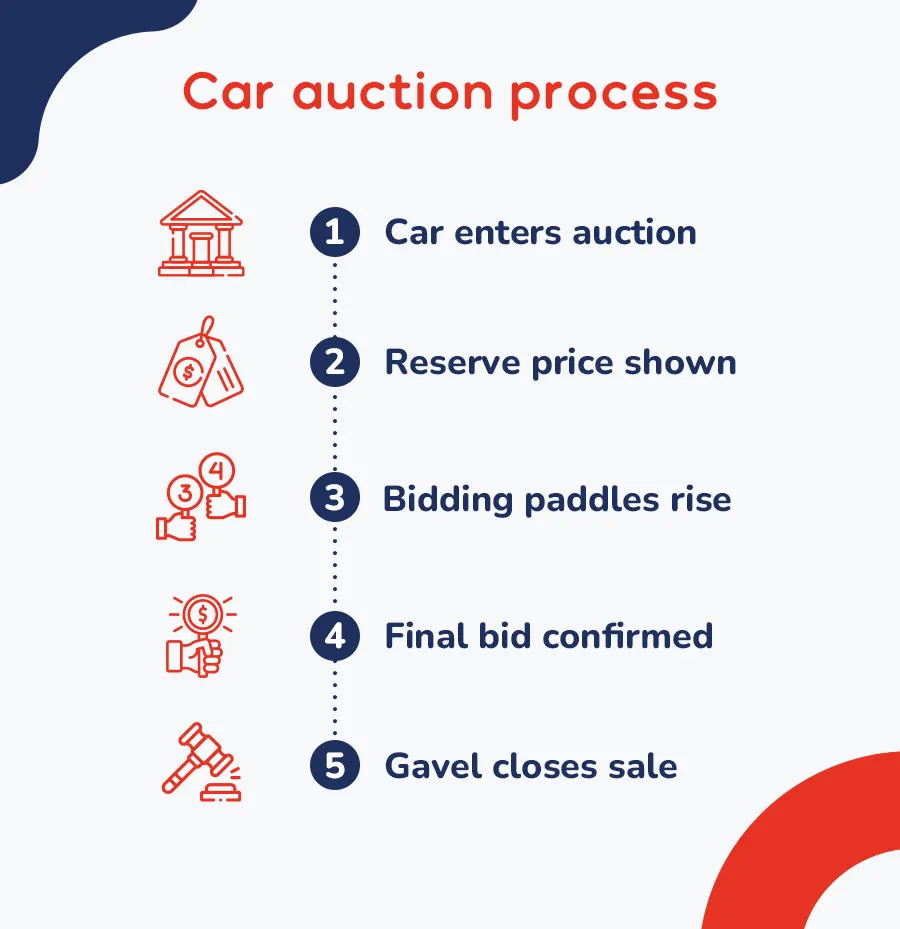
A car auction in Australia is a public or online car sale offering vehicles to the highest bidder. The car auction process usually starts with a reserve price, the minimum amount the seller is willing to accept. Bidding occurs, and the car is sold to the person with the final bid, provided it meets or exceeds the reserve. Buyers and sellers may also pay a fee to the auction house. For many sellers, auctions are a way to move vehicles quickly, so cars go to auction when they may not sell easily through private listings or dealerships.
[section_inner_1 id="auction-pros" format="ul"]
Pros of selling at auction
Selling your car at auction can offer some unique advantages compared to private sales or dealerships:
- Potential for high bids: If there’s strong competition among buyers, you may achieve a higher price than expected.
- Fast sale: Auctions move quickly, and once the hammer falls, the deal is final.
- Certainty of sale: Provided the reserve price is met, you know your car will sell on the day.
- No direct negotiations: The bidding process eliminates the back-and-forth haggling common in private sales.
- Wide exposure: Auctions attract dealers, collectors, and individuals, which can increase demand for your vehicle.
For many sellers, these auction car benefits answer the question, "Is it worth selling your car at auction?" The main reason to sell your car at auction is the potential to combine speed with the chance of securing a competitive price.
[/section_inner_1]
[section_inner_1 id="auction-cons" format="ul"]
Cons of selling at auction
While auctions can be fast and competitive, there are several disadvantages to consider:
- Uncertain final price: If bidding is low, the final bid may fall short of your expectations.
- Seller fees: Auction houses usually charge a listing or sales fee, which reduces your overall return.
- No guarantee of sale: If the reserve price isn’t met, your car may remain unsold.
- Limited control: Once the auction begins, you can’t negotiate or influence the outcome.
- Stress of competition: The fast-paced nature of auctions doesn’t suit every seller, especially those unfamiliar with the process.
These drawbacks highlight that auctions are best suited to sellers who are comfortable with uncertainty and who prioritise speed over maximising value.
[/section_inner_1]
[section_inner_1 id="auction-best-fit" format="overview"]
When is selling at auction the best option?
Selling your car at auction works best for unique models or vehicles with strong collector interest, where bidding competition can push the price higher. It’s also a good fit if you’re looking for a quick sale and don’t want the hassle of private negotiations.
If you’re wondering how to sell a car at auction, the process is straightforward: set a reserve price, list your vehicle, and let buyers compete until the final bid. Whether you’re asking how to auction my car in Australia at a physical event or how to auction my car online, auctions can be a practical option when your vehicle has special appeal.
[/section_inner_1]
[/section]
[section id="what-do-car-wreckers-do" format="overview"]
What do car wreckers do?
In simple terms, the car wrecking refers to businesses that buy vehicles at the end of their life and dismantle them for salvage, recycling, and parts. Wreckers help reduce waste by reusing components and safely disposing of what can’t be recycled. Suppose you’re wondering what to do when selling a car to a wrecker. In that case, the main steps are to provide proof of ownership and usually arrange deregistration before handing over the vehicle. For a deeper look at the process, visit 1800 Salvage.
[section_inner_1 id="wrecker-pros-cons" format="proscons"]
Pros and cons of using a car wrecker
[div]
Pros
- Environmentally friendly – cars are dismantled for salvage, recycling, and parts.
- Quick way to dispose of an unroadworthy or damaged vehicle.
- Saves you the hassle of advertising or negotiating with buyers.
- Some wreckers offer free towing or removal.
Cons
- You won’t get the best price compared to private sales or dealers.
- May need to organise deregistration before handing over the car.
- Not all wreckers accept every make or model.
- Payment amounts vary and are usually modest.
[/div]
[/section_inner_1]
[section_inner_1 id="deregister-before-wrecker" format="overview"]
Do I need to deregister before using a car wrecker?
Yes, you’ll need to deregister your car in most states before wrecker services can take it. This usually involves submitting cancellation forms with your local road authority, handing in the number plates, and updating the records so you’re no longer responsible for the vehicle. If you’re asking, “Do I have to cancel registration before wrecking a car?”, the answer is generally yes, though the exact process can vary by state, so it’s best to check your local rego requirements.
[/section_inner_1]
[/section]
[section id="most-money-method" format="overview"]

Which selling method gets you the most money?
If your main goal is to sell your car for the most money, the best way to do so is usually through a private sale. Selling privately lets you set your own price and negotiate directly with buyers, which can maximise the value of your vehicle and deliver the highest ROI.
That said, the trade-off is time and effort. Dealerships and car-buying services may offer less net profit but provide convenience, speed, and less hassle. Ultimately, the choice comes down to whether you prioritise how to get the best price for your car or whether you’d rather sacrifice some profit for a more straightforward process.
[/section]
[section id="unroadworthy-options" format="overview"]
What if your car is no longer roadworthy?
If you’re thinking about selling an unroadworthy car, you still have options. Some vehicles can be repaired with a roadworthy certificate, while others are best sold as scrap to a wrecker or specialist salvage service. The exact approach depends on the condition of your car, but if you’re wondering how to sell an unroadworthy vehicle, the most common pathways are through wreckers, car buying services that accept damaged vehicles, or selling it privately with full disclosure of its condition.
[/section]
[section id="which-method-is-right" format="overview"]
Which selling method is right for you?
The best way to sell a used car depends on your priorities. If maximising price is the goal, a private sale often delivers the most value, but it comes with more time and effort. Auctions can be effective for rare vehicles, while wreckers are the answer for no longer roadworthy cars.
On the other hand, dealerships and car-buying services focus on urgency and convenience, providing a simple solution when speed matters most. The right choice comes down to comparing your needs — whether you’re looking for the perfect buyer match or the quickest turnaround.
If you’re considering selling a used car or wondering where you can sell used cars without the stress, 1800 Car Buyers offers a fast, transparent, and fully digital alternative. Get an instant quote today and see how easy it can be to sell your car.
[/section]
[section id="book-or-contact" format="cta"]
[/section]
Table of contents

