


[section id="paperwork-for-selling-car-australia" format="overview"]
When it comes to selling a car in Australia, having the necessary documents in order is more than just a formality; it’s a crucial step to ensure a smooth and hassle-free transaction. Proper paperwork not only proves vehicle ownership but also protects you from liability once the car has been handed over to the new owner.
Most state or territory transport authorities require sellers to provide a combination of proof of ownership, registration papers, and sometimes a roadworthy certificate, depending on the vehicle and location.
These legal documents give prospective buyers reassurance that the vehicle meets minimum safety standards and that the transfer of ownership can be processed without issue. Missing or incorrect paperwork can result in rejected applications, delays in updating records, and even fines if the sale isn’t properly lodged.
Navigating the paperwork doesn’t need to be stressful. By understanding what’s required to sell a car and preparing these documents in advance, you can ensure a smooth sale and avoid compliance issues across Australia.
[/section]
[section id="essential-documents-for-selling-your-car-in-australia" format="overview"]
Essential documents for selling your car in Australia
Before you list your vehicle or arrange a sale, it’s important to gather all the essential documents required to sell a car in Australia. Having these ready from the start ensures a smooth sale and facilitates a swift transfer of ownership to the buyer. While the exact paperwork may vary slightly between states and territories, most car sales across Australia involve the following core documents:
[section_inner_1 id="proof-of-ownership" format="overview"]
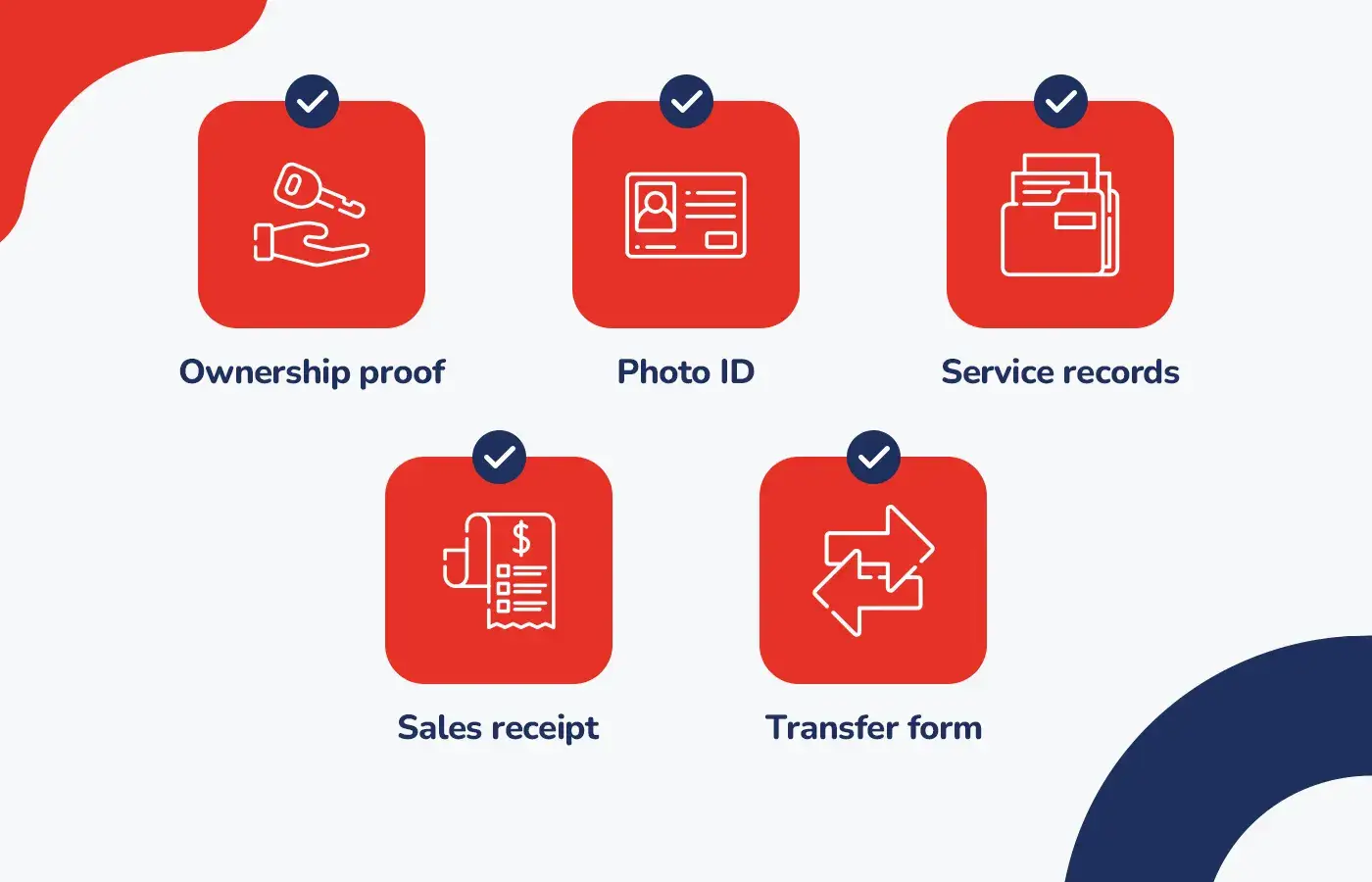
1. Proof of ownership
This is a crucial document required for every car sale. It proves that you are legally entitled to sell the vehicle. Typically, this includes the certificate of registration or rego papers, which display the vehicle identification number (VIN), your name, and the vehicle details. Without proof of ownership, you won’t be able to complete the transfer of ownership form or lodge a notice of disposal with your local transport authority.
[/section_inner_1]
[section_inner_1 id="valid-identification" format="overview"]
2. Valid identification
Both the seller and buyer must provide a valid photo ID. This is required to confirm identities during the transfer of ownership and helps the transport authority update its records correctly. A driver’s licence or passport is usually sufficient.
[/section_inner_1]
[section_inner_1 id="service-history-and-maintenance-records" format="overview"]
3. Service history and maintenance records
While not legally mandatory, having the service history on hand is one of the best ways to reassure potential buyers. A well-documented maintenance history provides confidence that the vehicle meets safety standards and has been properly maintained, helping to justify the sale price.
[/section_inner_1]
[section_inner_1 id="bill-of-sale-or-sales-receipt" format="overview"]
4. Bill of sale or sales receipt
This legal document outlines the agreed-upon sale price, the buyer's and seller's details, and details about the vehicle. It serves as a record of the transaction, protecting both parties in the event of disputes that may arise later. Many states offer online templates to simplify this process.
[/section_inner_1]
[section_inner_1 id="vehicle-transfer-form" format="overview"]
5. Vehicle transfer form
Finally, you’ll need a vehicle transfer form, often referred to as a transfer of ownership form, to officially notify the transportation authority that ownership has changed. This form must be submitted to the relevant state or territory authority promptly to avoid fines or complications.
[/section_inner_1]
Having these necessary documents in order before you advertise or negotiate ensures a smooth and hassle-free transaction, whether you’re selling a vehicle privately or through a professional service like 1800 Car Buyers.
[/section]
[section id="do-you-need-a-roadworthy-or-safety-certificate" format="overview"]
Do you need a roadworthy or safety certificate?
In most parts of Australia, a roadworthy certificate (RWC) or safety certificate is a crucial document required when you sell a car. This certificate confirms that the vehicle meets the minimum safety standards and is safe to be driven on public roads. The exact requirements vary between states and territories, so it’s essential to understand what’s required in your location to avoid delays during the sale process.
[section_inner_1 id="when-a-certificate-is-required" format="overview"]
When a certificate is required
If you’re selling a registered vehicle privately, most states require you to provide a valid roadworthy certificate before ownership can be transferred to the buyer. In some states, such as Queensland, the certificate must be displayed on the vehicle at the time of advertising.
In others, such as Victoria, you’ll need to obtain a RWC before completing the transfer of ownership with the relevant transport authority.
[/section_inner_1]
[section_inner_1 id="when-a-certificate-is-not-required" format="overview"]
When a certificate is not required
There are some exceptions. For example, in certain situations where a vehicle is being sold unregistered, or to a wrecker, a roadworthy certificate may not be necessary. Similarly, if the vehicle is being transferred between immediate family members, some jurisdictions waive the requirement.
However, even if a roadworthy certificate is not required, it’s still a good idea to obtain one to reassure prospective buyers and ensure a smooth sale.
[/section_inner_1]
[section_inner_1 id="how-to-obtain-a-roadworthy-certificate" format="overview"]
How to obtain a roadworthy certificate
To get a RWC, you’ll need to book an inspection with a licensed tester approved by your local transport authority. The vehicle will be assessed to ensure it meets the minimum safety standards.
If it passes, you’ll receive a roadworthy certificate, which is usually valid for a set period (often 30 days). If it fails, repairs will be required before a certificate can be issued. Once you have this document, you can submit it along with the transfer form to complete the transfer of ownership.
[/section_inner_1]
[/section]
[section id="what-paperwork-do-buyers-need-to-complete" format="overview"]
What paperwork do buyers need to complete?
Selling a car isn’t just about the documents you provide as the seller. Buyers also have legal responsibilities to ensure the transfer of ownership is completed properly. Understanding what paperwork buyers need to complete will help you guide the process and avoid delays with the transport authority. This ensures the ownership of the vehicle is transferred smoothly, protecting both parties from liability.
[section_inner_1 id="vehicle-transfer-form-buyer" format="overview"]
Vehicle transfer form
The buyer must complete the vehicle transfer form, also known as the transfer of ownership form, with accurate details. This form includes information about the vehicle, the sale price, and both the buyer’s and seller’s contact details. Once signed, it must be submitted to the relevant transport authority within the required timeframe to officially transfer ownership to the new owner.
[/section_inner_1]
[section_inner_1 id="notice-of-disposal-buyer" format="overview"]
Notice of disposal
In most Australian states and territories, buyers are also responsible for lodging a notice of disposal (or an equivalent document) with the relevant authority. This ensures that both the seller and buyer are officially recognised in the transaction record and that the transport authority can update its records. Lodging this notice promptly protects the seller from any fines or responsibilities related to the vehicle after the sale.
[/section_inner_1]
[section_inner_1 id="payment-records-and-proof-of-identity" format="overview"]
Payment records and proof of identity
Buyers should also retain payment records and provide valid identification to facilitate a seamless transfer process. These documents may be required by the transport authority to verify the buyer’s details and finalise the ownership form.
[/section_inner_1]
By understanding the buyer’s responsibilities and ensuring all documents are completed accurately and submitted on time, you can help ensure a smooth and hassle-free transaction.

[/section]
[section id="what-paperwork-is-required-to-sell-a-car-in-nsw" format="ul"]
What paperwork is required to sell a car in NSW?
If you’re selling a car in New South Wales (NSW), there are specific documents and legal steps you’ll need to follow to ensure the transfer of ownership is processed correctly. These requirements are set by Transport for NSW, the state’s official transport authority.
To sell your car in NSW, you’ll need to prepare the following:
- Proof of ownership – This is usually the current certificate of registration, which shows that you’re the legal owner of the vehicle.
- Notice of disposal – Once the sale is complete, the seller must lodge a notice of disposal with Transport for NSW. This protects you from any fines, toll notices, or legal issues that occur after the vehicle has changed hands.
- Vehicle transfer form – Both the seller and buyer need to complete and sign this form. The buyer is then responsible for submitting it to Transport for NSW to officially update their records.
- Roadworthy or safety certificate (if applicable) – In NSW, a roadworthy certificate isn’t always required, but a valid safety inspection report (also known as a pink slip) may be needed if the vehicle’s registration is due for renewal.
- Proof of identity – Both parties should provide valid photo ID to finalise the transfer of ownership.
- Payment record – Keeping a written record of the agreed sale price and payment method is recommended to create a clear record of the transaction.
All paperwork must be submitted to the relevant transport authority promptly after the sale to avoid delays or fines. Ensuring all documents are in order helps both the seller and buyer complete the sale efficiently and ensure a smooth transaction.
[/section]
[section id="what-paperwork-is-required-to-sell-a-car-in-vic" format="ul"]
What paperwork is required to sell a car in VIC?
In Victoria, the requirements for selling a car are more stringent than in many other states, particularly in terms of roadworthiness. All transfers are managed through VicRoads, the state’s transport authority, and the right paperwork is essential to avoid delays or rejected transfers.
When selling a car in VIC, you’ll generally need:
- Certificate of roadworthiness – In Victoria, a roadworthy certificate is required for almost every private vehicle sale. The certificate must be issued by a licensed tester and is typically valid for 30 days. Without this certificate, VicRoads will not process the transfer of ownership.
- Vehicle transfer form – Both the seller and buyer must complete the official VicRoads transfer form. It must include accurate vehicle information, the sale price, and both parties’ details. This form must be submitted within 14 days of the sale.
- Proof of ownership – The current certificate of registration serves as evidence that you’re legally entitled to sell the vehicle.
- Proof of identity – Both parties need to provide valid ID so VicRoads can update their records correctly.
- Notice of disposal – Sellers are required to lodge a notice of disposal with VicRoads to formally remove their name from the vehicle’s registration. This is a key step to protect yourself from liability after the sale.
- Payment record – Keeping a written record of the agreed price and method of payment provides a clear record of the transaction and can help resolve any disputes later.
VicRoads is strict about submitting paperwork to the relevant authority promptly. Missing or incorrect documents often result in delays, so it’s best to have everything prepared before listing the car. Ensuring all paperwork is in order also gives prospective buyers confidence in a smooth sale.
[/section]
[section id="what-paperwork-is-required-to-sell-a-car-in-qld" format="ul"]
What paperwork is required to sell a car in QLD?
Selling a car in Queensland (QLD) involves specific requirements, particularly regarding the timing of obtaining a safety certificate. The process is regulated by the Queensland Department of Transport and Main Roads, and ensuring all documents are in order early on will help you avoid fines or transfer delays.
Before you advertise or finalise the sale, make sure you have the following ready:
- Safety certificate (RWC) – In Queensland, a roadworthy certificate is required before you can even advertise the car for sale. This certificate must be displayed on the vehicle (usually on the windscreen) while it’s listed for sale. It confirms that the vehicle meets minimum safety standards, and it’s illegal to advertise without one.
- Vehicle transfer form – Once the sale is agreed, both parties must complete the official vehicle transfer form. The buyer then has 14 days to lodge it with the Department of Transport and Main Roads.
- Proof of ownership – Your current certificate of registration will serve as evidence that you’re the legal owner of the vehicle.
- Notice of disposal – Sellers must submit a notice of disposal to the department to remove their name from the vehicle registration and avoid future fines.
- Proof of identity – Both the buyer and seller must provide valid ID to verify their details.
- Payment record – It’s best practice to keep a written record of the sale price, payment method, and key transaction details to create a reliable record of the transaction.
Because Queensland requires the certificate to be displayed at the time of advertising, it’s wise to book your inspection early. Having your paperwork prepared in advance helps ensure a smooth and hassle-free transaction, while also keeping you compliant with state regulations.
[/section]
[section id="what-paperwork-is-required-to-sell-a-car-in-wa" format="ul"]
What paperwork is required to sell a car in WA?
In Western Australia (WA), selling a car is generally more straightforward than in many other states. The process is overseen by the Department of Transport (DoT), and while a roadworthy certificate isn’t typically required, having the right documents in order is still essential to ensure the transfer of ownership goes smoothly.
When selling a car in WA, make sure you have:
- Proof of ownership – Your current certificate of registration acts as evidence that you’re legally entitled to sell the vehicle.
- Notification of change of ownership – WA doesn’t use a traditional “notice of disposal” form. Instead, both the seller and buyer are required to complete a notification of change of ownership online or via paper forms through the WA DoT. This must be submitted within 7 days of the sale.
- Vehicle transfer form – The buyer is responsible for lodging the vehicle transfer form with the DoT and paying any transfer fees. Both parties should ensure the form is completed accurately to avoid processing issues.
- Proof of identity – Both the buyer and seller should provide valid ID so the DoT can update their records correctly.
- Payment record – Keeping a record of the sale price and transaction details provides a clear record of the transaction, which can be useful if any disputes arise later.
Unlike in some other states, WA doesn’t generally require a roadworthy certificate for private car sales, which can make the process quicker. However, ensuring all paperwork is completed correctly and submitted to the relevant transport authority helps to ensure a smooth sale and protects both the seller and buyer after the transaction.
[/section]
[section id="what-paperwork-is-required-to-sell-a-car-in-sa" format="ul"]
What paperwork is required to sell a car in SA?
In South Australia (SA), the process of selling a car is overseen by Service SA, the state’s transport authority. Compared to states like VIC or QLD, the paperwork requirements are a little simpler, but there are still essential steps to follow to ensure the transfer of ownership is properly completed.
When selling a car in SA, make sure you prepare:
- Proof of ownership – The current certificate of registration is required to prove that you legally own the vehicle and have the right to sell it.
- Notice of disposal – Once the sale is finalised, you must lodge a notice of disposal with Service SA. This is one of the most important steps, as it formally notifies the authority that you’re no longer responsible for the vehicle.
- Vehicle transfer form – The buyer is responsible for submitting the completed vehicle transfer form to Service SA, but both parties should check that all vehicle and sale price details are accurate before signing.
- Proof of identity – Both buyer and seller should provide valid ID so Service SA can update their records.
- Payment record – It’s good practice to keep a written record of the agreed price and payment method to create a clear record of the transaction.
Unlike VIC or QLD, South Australia doesn’t require a roadworthy certificate for standard private vehicle sales. However, ensuring all documents are in order and submitting them promptly will help you ensure a smooth sale and protect both the seller and buyer after the transaction.
[/section]
[section id="what-paperwork-is-required-to-sell-a-car-in-tas" format="ul"]
What paperwork is required to sell a car in TAS?
Selling a car in Tasmania (TAS) involves a straightforward set of steps managed by Transport Tasmania, the state’s transport authority. While the paperwork is less complicated than in states like VIC or QLD, it’s still essential to complete all forms correctly to ensure the transfer of ownership is processed without issues.
When preparing to sell your car in TAS, make sure you have:
- Proof of ownership – Your current certificate of registration confirms that you legally own the vehicle and have the right to sell it.
- Vehicle transfer form – Both parties must complete this form with accurate vehicle details and the sale price, then submit it to Transport Tasmania. The buyer is typically responsible for lodging the form and paying any associated fees.
- Notice of disposal – Once the sale is finalised, you must lodge a notice of disposal with Transport Tasmania to remove your name from the vehicle record and avoid future liabilities.
- Proof of identity – Both the buyer and seller must provide valid ID to allow Transport Tasmania to update their records.
- Payment record – Keeping a written record of the agreed sale price and payment method helps create a clear record of the transaction for both parties.
Tasmania doesn’t generally require a roadworthy certificate for private car sales. However, Transport Tasmania may request an inspection in certain situations, particularly if the vehicle hasn’t been registered in a while. Having all documents in order and lodging them promptly will help you ensure a smooth sale and protect both the seller and buyer after the transaction.
[/section]
[section id="what-paperwork-is-required-to-sell-a-car-in-act" format="ul"]
What paperwork is required to sell a car in ACT?
Selling a car in the Australian Capital Territory (ACT) involves a few unique administrative steps managed by Access Canberra, the local transport authority. While similar in many ways to other states, the ACT has its own forms and timelines that sellers should follow closely to avoid transfer delays.
Before completing the sale, make sure you have the following:
- Proof of ownership – Your certificate of registration is required to confirm that you legally own the vehicle and are entitled to sell it.
- Vehicle transfer notification – In the ACT, sellers must complete a Vehicle Transfer Notification form and lodge it with Access Canberra within 14 days of the sale. This ensures the authority can update its records and transfer the ownership of the vehicle to the buyer.
- Vehicle transfer form – The buyer must also complete a vehicle transfer form, including accurate details of the vehicle and sale price, and submit it to Access Canberra to finalise the transfer of ownership.
- Notice of disposal – Sellers must lodge a notice of disposal to officially remove their name from the vehicle record. This is a key step to avoid responsibility for fines or incidents after the sale.
- Proof of identity – Both the seller and buyer must provide valid ID to verify their details during the transfer process.
- Payment record – It’s best practice to keep a written record of the sale price and transaction details to create a reliable record of the transaction.
The ACT doesn’t typically require a roadworthy certificate for private car sales, but inspections may be requested under certain circumstances. Ensuring all documents are in order and lodging them on time will help both the seller and buyer ensure a smooth sale.
[/section]
[section id="what-paperwork-is-required-to-sell-a-car-in-nt" format="ul"]
What paperwork is required to sell a car in NT?
Selling a car in the Northern Territory (NT) involves a clear but slightly different process compared to other states. All transfers are managed by the Motor Vehicle Registry (MVR), and ensuring that all required paperwork is completed correctly is essential for a smooth handover of ownership.
When selling a car in NT, you’ll need to:
- Proof of ownership – The current certificate of registration acts as proof that you’re legally entitled to sell the vehicle.
- Application to transfer vehicle registration – In NT, the buyer must complete this official form and submit it to the MVR within 14 days of the sale. The seller should ensure their section of the form is completed accurately, including the sale price and vehicle details.
- Notice of disposal – Sellers are required to lodge a notice of disposal with the MVR as soon as the sale is finalised. This step is crucial as it officially removes your name from the vehicle registration, protecting you from liability after the sale.
- Proof of identity – Both parties must provide valid ID so the MVR can update their records correctly.
- Payment record – Maintaining a written record of the agreed sale price and transaction details provides a clear record of the transaction for both parties.
The NT generally does not require a roadworthy certificate for private vehicle sales, though inspections may be required in some cases, such as if the vehicle has been unregistered for a period. Submitting all documents to the relevant transport authority on time ensures the transfer of ownership proceeds without delays and helps to ensure a smooth sale.
[/section]
[section id="how-1800-car-buyers-simplifies-the-paperwork-process" format="cta"]
How 1800 Car Buyers simplifies the paperwork process
Selling a car can feel complicated when you’re juggling transfer forms, notices of disposal, safety certificates, and different rules across each Australian state or territory.
That’s where 1800 Car Buyers makes the difference. Our team handles the entire paperwork process for you, from verifying ownership to lodging required forms with the relevant transport authority, so you don’t have to worry about missed deadlines or compliance issues.
We provide clear instructions, digital documentation, and fast processing to help you sell your car in Australia smoothly. With instant quotes, secure payments, and nationwide coverage, we make it easy to transfer ownership of the vehicle and finalise the sale quickly, no matter where you’re located.

[/section]
Table of contents

