

[section id="a-state-by-state-guide-with-everything-you-need-to-know" format="overview"]
A state-by-state guide with everything you need to know!
If you’re looking to legally sell your car in Australia, this guide has you covered. Every Australian state and territory has its own set of rules, forms, and requirements, which can feel overwhelming if you’ve never sold a car before. This article is designed to be a clear, no-nonsense guide to selling your car, breaking down the process state by state so you can follow along with confidence.
At 1800 Car Buyers, we deal with this every day. Our team handles sales and paperwork across the country, which means we know the ins and outs of what each road authority requires. That’s why you can trust us to give you reliable, straightforward information on selling without the jargon or confusion.
Here’s what you’ll get from this article:
- The legal requirements for each state and territory.
- The necessary documents you’ll need and when to use them.
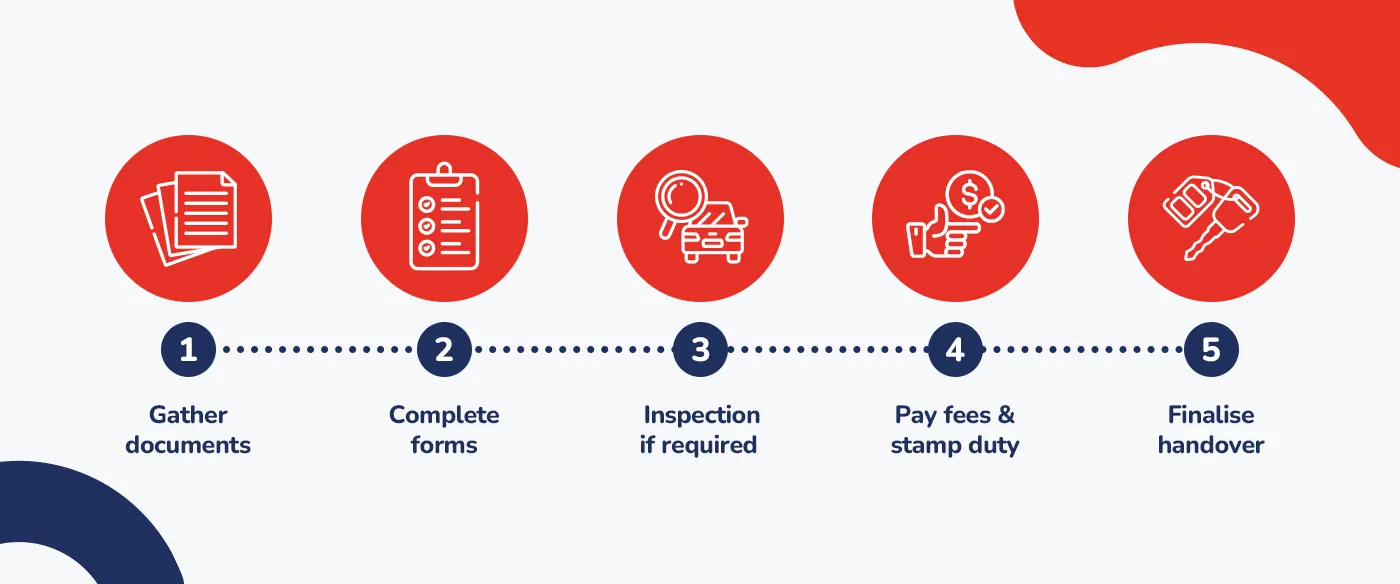
- Step-by-step instructions to follow in the right order.
- Tips for a smooth sale so the process feels less stressful.
Think of this guide as sitting down with a mate who knows the system inside out. We’ll explain what to do, why it matters, and how to make sure the sale is done properly from start to finish.
[/section]
[section id="what-are-the-legal-requirements-for-selling-a-used-car-in-australia" format="overview"]
What are the legal requirements for selling a used car in Australia?
Private car sales in Australia are regulated by state-based legislation. In practice, each state transport authority (think Service NSW, VicRoads, TMR QLD, etc.) sets the steps and forms you’ll follow so the registration moves cleanly to the new owner and the vehicle sale is legally recognised.
If you’re wondering what is required to sell a car, the answer is the same everywhere at a high level, then tailored by your state. You’ll need the required documents, you’ll complete the right forms, and you’ll pay any applicable fees or duties. Each authority also explains exactly what’s required for selling a car on its website, which we break down in the state sections below.
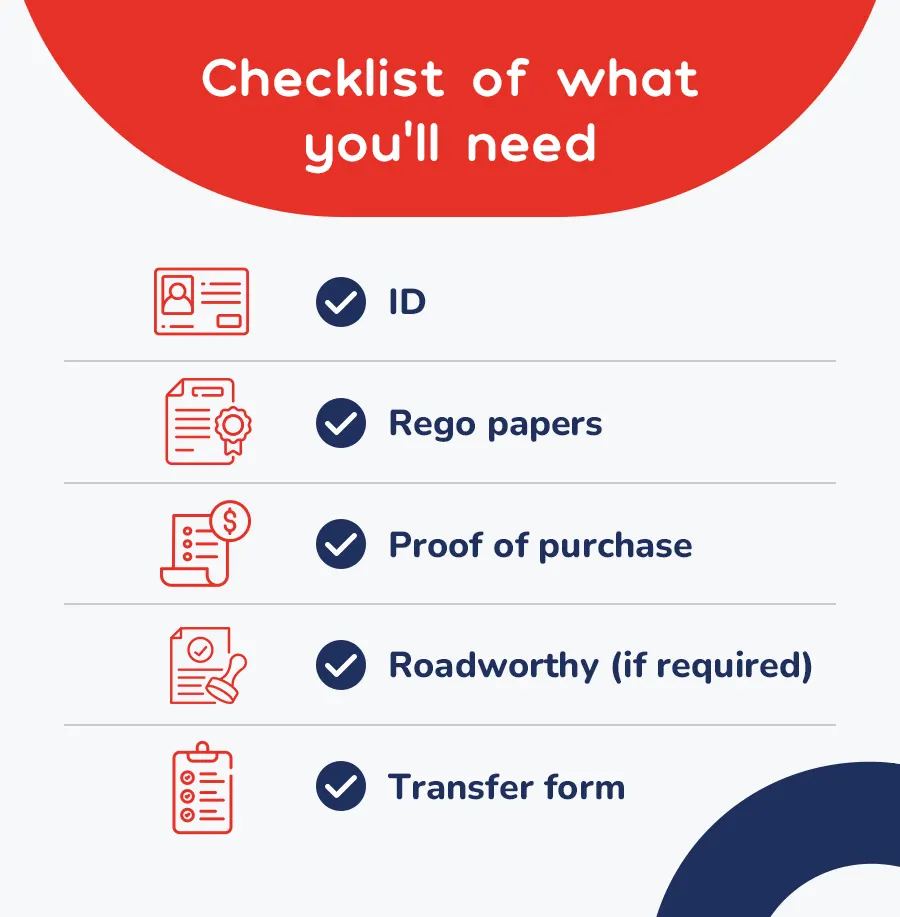
Here are the common paperwork requirements for selling a car you’ll see across Australia:
- Proof of identity and proof that you own the car.
- A Transfer of Ownership or Notice of Disposal form from your state or territory.
- Payment of transfer fees and any stamp duty (if applicable).
Because every jurisdiction tweaks the details, the trick is navigating the paperwork for your location and following the official order of steps. That’s effectively how to buy and sell cars legally in Australia: confirm your local rules, gather the right documents, lodge the correct forms on time, and make sure the registration is updated to the new owner.
Prefer to skip the admin? You could always sell your car to 1800 Car Buyers. For now, let's get into the state-by-state guides.
[/section]
[section id="do-i-need-a-roadworthy-certificate-to-sell-my-car" format="overview"]
Do I need a roadworthy certificate to sell my car?
Whether you need a roadworthy certificate to sell your used car depends on where you live. A seller may need a safety certificate based on location, because each state and territory has its own rules. In some places, you’ll need to organise a vehicle inspection before you can transfer ownership. In others, a certificate isn’t required unless the car is changing hands privately rather than going to a dealer.
So, do you need a roadworthy to sell a car? The short answer is: often, yes, but not always. A roadworthy certificate, when selling, is designed to prove that your car meets the minimum safety standards set by your state authority. It usually checks things like brakes, tyres, lights, and structural integrity. Depending on the age of the car, inspections may be stricter or exemptions may apply.
That leads to the next common question: can you sell a car without a roadworthy? In some states, you can, particularly if you’re selling a car without a current safety certificate to a dealer, who then takes on the responsibility of making it roadworthy before resale. But if you’re selling privately, a certificate is required in most cases.
It’s also important to know that a safety certificate doesn’t cover everything. If your car is still under finance, you’ll need to settle that debt before the sale can be completed, regardless of whether you’ve got a roadworthy in hand.
In short: check the rules for your state carefully. The requirement for a roadworthy isn’t nationwide, but if your state demands it, you can’t skip it.

[/section]
[section id="what-are-the-rules-for-selling-a-car-in-nsw" format="mixed"]
What are the rules for selling a car in NSW?
New South Wales sellers must notify Service NSW and follow registration steps to make the transfer official. Under NSW car-selling laws, both the buyer and seller are responsible for lodging the right forms and ensuring the car’s registration moves to the new owner. Let's explain the process of selling a car in NSW. Here’s what you need to know:
[section_inner_1 id="essential-documents-for-selling-your-car-nsw" format="ul"]
Essential documents for selling your car
To sell a car in New South Wales, you’ll need:
- Proof of identity (driver's licence)
- The car’s registration certificate
- A bill of sale or proof of purchase showing the agreed price
- If the car is more than five years old, a valid pink slip (safety inspection report)
These are the state-specific requirements that confirm ownership and the car’s roadworthiness.
[/section_inner_1]
[section_inner_1 id="steps-to-sell-your-car-in-nsw" format="ol"]
Steps to sell your car in NSW
- Gather the documents for selling your car, including ID, rego papers, proof of purchase, and pink slip if required.
- Complete the transfer paperwork through Service NSW.
- If applicable, organise the safety inspection and make sure the pink slip is valid.
- Pay any transfer fees or stamp duty at the time of lodgement.
- Submit a notice of disposal online with Service NSW. This must be done within 14 days of the sale to protect you from any future fines.
- Finalise payment securely and hand over the vehicle.
[/section_inner_1]
[section_inner_1 id="fees-and-charges-nsw" format="ul"]
Fees and charges
In New South Wales, the main costs are:
- Vehicle transfer fee
- Stamp duty, based on the sale price or market value of the vehicle
You can confirm exact fees at the official Service NSW transfer page.
[/section_inner_1]
[section_inner_1 id="quick-tip-for-new-south-wales-car-sellers" format="overview"]
Quick tip for New South Wales car sellers
Don’t delay your notice of disposal — it’s what protects you if the new owner racks up tolls or fines. If you’d prefer a faster, hassle-free sale where the paperwork is handled for you, consider selling directly to 1800 Car Buyers in Sydney. We make sure everything is lodged correctly, so you can move on with peace of mind.
[/section_inner_1]
[/section]
[section id="what-are-the-rules-for-selling-a-car-in-vic" format="mixed"]
What are the rules for selling a car in VIC?
In Victoria, the rules are a little stricter than in some other states. A VIC seller must provide a valid roadworthy certificate when transferring a car privately. This is part of Victorian car-selling laws, and it ensures the car meets minimum safety standards before it changes hands. If you’ve been wondering about the process of selling a car in Victoria, here’s how it works.
[section_inner_1 id="documents-youll-need-vic" format="ul"]
Documents you’ll need
When selling a car in Victoria, you’ll need:
- Proof of identity (driver's licence)
- The vehicle’s registration certificate
- A valid roadworthy certificate issued within the last 30 days
- Proof of purchase, such as a contract or invoice
- You’ll also need to provide a receipt to the buyer once the sale process is finalised
These documents confirm ownership and compliance with state requirements, and they protect both parties in the transaction.
[/section_inner_1]
[section_inner_1 id="steps-to-sell-your-car-in-victoria" format="ol"]
Steps to sell your car in Victoria
- Gather your vehicle ownership documents, including your licence, rego certificate, and a current roadworthy.
- Complete the transfer paperwork through VicRoads. Both the buyer and seller must sign the transfer form.
- Submit the roadworthy certificate, making sure it’s dated within 30 days of the transfer.
- Pay any transfer fees or stamp duty at the time of lodgement.
- Notify your insurer once the car is sold so your car insurance policy is updated or cancelled.
- Hand over the car, the keys, and the signed paperwork to the buyer.
[/section_inner_1]
[section_inner_1 id="fees-and-charges-vic" format="ul"]
Fees and charges
In Victoria, the key costs are:
- A transfer fee set by VicRoads
- Stamp duty is calculated based on the sale price or market value of the vehicle
Check the latest fees directly with VicRoads.
[/section_inner_1]
[section_inner_1 id="quick-tip-for-victorian-car-sellers" format="overview"]
Quick tip for Victorian car sellers
Remember that the roadworthy certificate must be issued within 30 days of the transfer. An older one won’t be accepted. If you’d rather avoid inspections and the paperwork altogether, you can sell directly to 1800 Car Buyers in Melbourne, where the team makes sure everything is taken care of quickly and legally.
[/section_inner_1]
[/section]
[section id="what-are-the-rules-for-selling-a-car-in-qld" format="mixed"]
What are the rules for selling a car in QLD?
In Queensland, the rules are clear and time-sensitive. To meet legal requirements, a QLD seller must provide a safety cert and complete the transfer in 14 days. These are set out under state car-selling laws, which outline the process of selling a car in Queensland.
[section_inner_1 id="documents-youll-need-qld" format="ul"]
Documents you’ll need
When selling a car in Queensland, you’ll need to have the following documents on hand:
- Proof of identity (driver's licence)
- The car’s registration certificate
- A current safety certificate (roadworthy) issued before advertising the vehicle for sale
- A proof of purchase that shows the sale price agreed between both parties
These documents establish the ownership of the vehicle and ensure the sale can be registered correctly.
[/section_inner_1]
[section_inner_1 id="steps-to-sell-your-car-in-qld" format="ol"]
Steps to sell your car in QLD
- Get the necessary documents in order, including ID, rego papers, safety certificate, and proof of purchase.
- Complete the transfer paperwork through Transport and Main Roads Queensland using the official transfer page.
- Fill in Form F3520 (Vehicle Registration Transfer Application) and lodge it with both parties’ signatures.
- Make sure the safety certificate is valid and issued before the sale.
- Pay any transfer fees or stamp duty at the time of lodgement.
- Keep a clear record of the transaction, including a receipt for both buyer and seller.
- Finalise payment and hand over the vehicle securely.
[/section_inner_1]
[section_inner_1 id="fees-and-charges-qld" format="ul"]
Fees and charges
In Queensland, you’ll need to cover:
- A vehicle transfer fee
- Stamp duty, which is calculated based on the sale price and the type of vehicle
Details can be confirmed on the Transport QLD website.
[/section_inner_1]
[section_inner_1 id="quick-tip-for-queensland-car-sellers" format="overview"]
Quick tip for Queensland car sellers
Always make sure your safety certificate is ready before you advertise. Skipping this step can result in fines. If you’d prefer to avoid the paperwork and time limits, you can sell directly to 1800 Car Buyers in Brisbane, where the team handles the transfer quickly and correctly.
[/section_inner_1]
[/section]
[section id="what-are-the-rules-for-selling-a-car-in-wa" format="mixed"]
What are the rules for selling a car in WA?
Unlike some states, a WA seller does not need a roadworthy, but must notify DOT once the sale is complete. Under Western Australian car-selling laws, the key requirement is letting the transport authority know the car has changed hands. If you’ve been wondering how to sell a car in WA, the process is simpler than you might expect.
[section_inner_1 id="documents-youll-need-to-transfer-ownership-of-your-car-wa" format="ul"]
Documents you’ll need to transfer ownership of your car
These are the documents you'll need when selling a vehicle in Western Australia:
- Proof of identity (driver's licence)
- The car’s registration papers
- A bill of sale or proof of purchase showing the agreed price
- A completed notice of disposal form, which is the crucial document required in Western Australia
These confirm the ownership of a vehicle and make sure the Department of Transport (DOT) can update its records correctly.
[/section_inner_1]
[section_inner_1 id="steps-to-sell-your-car-in-wa" format="ol"]
Steps to sell your car in WA
- Gather your ID, rego papers, and proof of purchase.
- Complete the transfer paperwork through the WA Department of Transport, the state’s transport authority.
- There’s no need for a roadworthy in WA, but you do need to lodge a notice of disposal so the registration is updated.
- Pay any admin or transfer fees that apply.
- Finalise the sale by handing over the keys and keeping a copy of the paperwork for your records.
[/section_inner_1]
[section_inner_1 id="fees-and-charges-wa" format="ul"]
Fees and charges
In WA, you won’t pay stamp duty at the point of sale. The main costs are:
- A small admin fee to update the rego
- Any outstanding fees tied to the car’s registration status
Check the latest fees on the DOT WA website.
[/section_inner_1]
[section_inner_1 id="quick-tip-for-wa-sellers" format="overview"]
Quick tip for WA sellers
The most important thing is submitting your notice of disposal straight away because it protects you if the new owner racks up fines. If you’d prefer to avoid the hassle of forms and trips to DOT, you can sell directly to 1800 Car Buyers in Perth, and we’ll make sure the paperwork is handled correctly.
[/section_inner_1]
[/section]
[section id="what-are-the-rules-for-selling-a-car-in-sa" format="mixed"]
What are the rules for selling a car in SA?
If you’re planning the sale of the vehicle in South Australia, the rules can shift a little depending on who you’re selling to. An SA seller may need an inspection depending on the buyer's status. For example, a private sale might require more checks than selling to a licensed dealer. Under the car-selling laws in SA, both the buyer and seller have obligations, and knowing them upfront makes life easier. Let's explain the car-selling process in South Australia.
[section_inner_1 id="documents-required-for-selling-a-car-in-south-australia" format="ul"]
Documents required for selling a car in South Australia
To sell a motor vehicle in South Australia, you’ll need:
- Proof of identity (driver's licence)
- The vehicle’s registration papers
- A receipt or proof of purchase
- In some cases, an inspection certificate, particularly for conditional sales or private transfers
Service SA also offers online tools through EzyReg to ensure that you have the information you need before starting the transfer.
[/section_inner_1]
[section_inner_1 id="steps-to-sell-your-car-in-sa" format="ol"]
Steps to sell your car in SA
- Gather your ID, rego papers, proof of purchase, and any required inspection certificates.
- Complete a vehicle transfer form through Service SA or lodge the details online via EzyReg.
- If the buyer is a dealer, inspections are usually not necessary. However, depending on the car’s condition, an inspection may be required for private sales.
- Pay the transfer fee and any stamp duty owed at the time of lodgement.
- Confirm the transfer with both parties, finalise payment securely, and hand over the vehicle.
[/section_inner_1]
[section_inner_1 id="fees-and-charges-sa" format="ul"]
Fees and charges
In South Australia, you’ll need to cover:
- A transfer fee
- Stamp duty, calculated on the market value or purchase price of the vehicle
- Possible inspection fees if a roadworthy check is needed
You can check current fees through Service SA’s transfer guide.
[/section_inner_1]
[section_inner_1 id="quick-tip-for-south-australian-sellers" format="overview"]
Quick tip for South Australian sellers
Don’t leave the paperwork until the last minute. Starting early with EzyReg makes the process smoother and avoids delays. If you’d prefer a simpler way to finalise the sale, 1800 Car Buyers in Adelaide can take care of the paperwork and ensure everything’s processed correctly.
[/section_inner_1]
[/section]
[section id="what-are-the-rules-for-selling-a-car-in-tas" format="mixed"]
What are the rules for selling a car in TAS?
If you’re wondering how to sell a car in Tasmania, the good news is that the process is more straightforward than in some other states. A TAS seller does not need a roadworthy, but must submit forms to make the transfer official. Under state rules, the car-selling process in Tasmania is managed by Service Tasmania, and the focus is on accurate paperwork rather than inspections.
[section_inner_1 id="documents-youll-need-tas" format="ul"]
Documents you’ll need
The essential documents you need to provide in Tasmania are:
- Proof of identity (driver's licence)
- Registration papers for the car
- Proof of purchase or receipt showing the sale price
- A signed transfer slip, which must be lodged with Service Tasmania
These confirm the proof of ownership and allow the transfer to be processed correctly. While inspections aren’t required, proper documentation is required to complete the sale.
[/section_inner_1]
[section_inner_1 id="steps-to-sell-your-car-in-tas" format="ol"]
Steps to sell your car in TAS
- Gather your licence, rego papers, proof of purchase, and transfer slip.
- Complete the transfer paperwork through Service Tasmania and make sure both parties sign it.
- Lodge the transfer slip at a Service Tasmania centre or post it as soon as possible after the sale.
- Pay the transfer fee when you lodge the form.
- Finalise payment securely with the buyer and keep copies of all signed paperwork.
[/section_inner_1]
[section_inner_1 id="fees-and-charges-tas" format="ul"]
Fees and charges
In Tasmania, you’ll need to cover:
- A transfer fee
- Stamp duty, based on the car’s market value or sale price
You can check the latest charges on the Transport Tasmania website.
[/section_inner_1]
[section_inner_1 id="quick-tip-for-tasmanian-car-sellers" format="overview"]
Quick tip for Tasmanian car sellers
Because there’s no roadworthy requirement, the key is to make sure your paperwork is correct and lodged quickly. This protects you from being linked to the car once it’s sold. If you’d rather skip the process, 1800 Car Buyers in Hobart can handle the paperwork for you, making the sale simple and stress-free.
[/section_inner_1]
[/section]
[section id="what-are-the-rules-for-selling-a-car-in-the-act" format="mixed"]
What are the rules for selling a car in the ACT?
An ACT seller must provide an inspection if the car is over 6 years old before the transfer can be finalised. This requirement falls under the ACT's car-selling laws, which are managed by Access Canberra. If you’re unsure about the car-selling process in the ACT, the main focus is on keeping the paperwork accurate and making sure inspections are carried out when needed.
[section_inner_1 id="documents-youll-need-act" format="ul"]
Documents you’ll need
When selling the car in the ACT, the paperwork you'll need to complete includes:
- Proof of identity (driver's licence)
- The car’s registration papers
- Proof of purchase showing the agreed price
- A valid inspection certificate is required if the car is more than six years old
These various documents confirm ownership and allow Access Canberra to update the registration records. To make the sale official, both the buyer and seller need to sign the transfer paperwork.
[/section_inner_1]
[section_inner_1 id="steps-to-sell-your-car-in-the-australian-capital-territory" format="ol"]
Steps to sell your car in the Australian Capital Territory
- Gather your ID, registration papers, proof of purchase, and inspection certificate (if the car is older than six years).
- Complete the transfer paperwork through Access Canberra.
- Arrange an inspection if your car falls under the six-year rule, and lodge the certificate with the transfer.
- Pay the required transfer fees and any stamp duty at the time of lodgement.
- Make sure both parties sign the transfer paperwork, then hand over the car and keys once payment has been made securely.
[/section_inner_1]
[section_inner_1 id="fees-and-charges-act" format="ul"]
Fees and charges
In the ACT, the main costs are:
- Vehicle transfer fee
- Stamp duty, calculated on the sale price or market value of the car
Details can be checked on the Access Canberra website.
[/section_inner_1]
[section_inner_1 id="quick-tip-for-car-sellers-in-the-act" format="overview"]
Quick tip for car sellers in the ACT
If your car is over six years old, book your inspection early. It’s the step most sellers forget, and it can cause delays. If you’d prefer a smoother option where the paperwork is handled for you, 1800 Car Buyers in Canberra can help you sell quickly and without stress.
[/section_inner_1]
[/section]
[section id="what-are-the-rules-for-selling-a-car-in-the-nt" format="mixed"]
What are the rules for selling a car in the NT?
In the Northern Territory, the rules are a bit different from down south. An NT seller may need an inspection depending on MVR conditions, which means the Motor Vehicle Registry (MVR) can require a roadworthy before the transfer is accepted. Under the car-selling laws in the NT, the focus is on making sure registration records are accurate and the sale is backed up with the right paperwork. If you’re unsure about the car selling process in the Northern Territory, here’s what to expect.
[section_inner_1 id="documents-youll-need-nt" format="ul"]
Documents you’ll need
When you’re selling a registered vehicle in the NT, the seller and buyer will both need to provide:
- Proof of identity (driver's licence)
- Registration papers showing the car is registered
- A proof of sale document or receipt
- An inspection certificate if the MVR requests it
These documents, if the car is changing hands, confirm ownership and let the registry process the transfer correctly.
[/section_inner_1]
[section_inner_1 id="steps-to-sell-your-car-in-the-nt" format="ol"]
Steps to sell your car in the NT
- Gather your ID, rego papers, and proof of purchase.
- Complete the transfer paperwork through the MVR.
- If requested, organise a roadworthy inspection and lodge the certificate with your paperwork.
- Pay the transfer fee and any stamp duty at the time of lodgement.
- Once the transfer is approved, the car is sold and no longer in your name. Always keep a copy of the receipt for your records.
[/section_inner_1]
[section_inner_1 id="fees-and-charges-nt" format="ul"]
Fees and charges
In the NT, you’ll need to pay:
- A transfer fee
- Stamp duty, based on the sale price or market value of the car
The exact costs can vary, so check directly with the MVR for the most current figures.
[/section_inner_1]
[section_inner_1 id="quick-tips-for-a-smooth-sale-in-the-nt" format="overview"]
Quick tips for a smooth sale in the NT
The NT has flexible rules, but don’t assume you can skip inspections. The MVR may still require one, depending on the car’s condition. To make things easier, you can also sell directly to 1800 Car Buyers in Darwin, where the paperwork is handled for you and payment is made quickly.
[/section_inner_1]

[/section]
[section id="can-i-sell-an-unregistered-car-in-australia" format="overview"]
Can I sell an unregistered car in Australia?
You can. An unregistered vehicle can be sold, but with additional steps. The rules don’t stop you from moving it on, but they do mean you’ll need to be organised with the paperwork and think ahead about how the car will be transported.
If you’re selling an unregistered car, the first thing is to prove it’s yours. With no current rego papers, the VIN number becomes the main identifier, so double-check it matches your records. You’ll also need to complete the right transfer forms so the buyer can put the car into their name without any hiccups. And because you can’t just drive it away, you’ll either need a short-term permit or line up trailer transport.
Plenty of people also ask if you can sell an unregistered car for cash. Yes, you can, but make sure you provide a receipt that clearly lists the sale details. That way, there’s no confusion later if fines or disputes pop up.
If you’re about to list your car that’s been sitting idle in the backyard, be upfront with buyers about the rego status. It’s common to suddenly need to sell your car when it’s been unused for months, and you can still choose to sell your vehicle in that state. Just expect buyers to factor in the cost of inspections and new registration when making their offer.
In the end, selling an unregistered car isn’t complicated. It just takes a little extra prep to prove ownership, keep the paperwork watertight, and sort out how the car’s going to get from your driveway to theirs.
[/section]
[section id="why-stress-sell-your-car-with-confidence-with-1800-car-buyers" format="cta"]
Why stress? Sell your car with confidence with 1800 Car Buyers!
When it comes to selling, the hardest part is often the car sale paperwork. Every state has its own rules, forms, and deadlines. That’s where we step in. 1800 Car Buyers simplifies all legal paperwork, so you don’t have to worry about missing a step or getting stuck in the system.
With us, you can make your car sale quick and straightforward. Whether your car is registered or not across any state or territory, we’ll ensure a successful sale from start to finish.
Here’s why Australians choose 1800 Car Buyers when they buy or sell a vehicle:
- Instant quotes and fast payments, so you can sell your car with confidence.
- No stress about forms — we take care of the paperwork.
- Australia-wide coverage, from metro hubs to regional areas.
- We even handle cars without rego, saving you the hassle.
Skip the stress, keep it simple, and let us handle the details. Start today with a free online quote: Get a price with 1800 Car Buyers.
[/section]
Table of contents

