

Key takeaways
- You can sell a modified car if it meets the applicable safety, registration and compliance requirements.
- Major engine, suspension, structural or safety changes may require certification by an authorised professional.
- Keep modification certificates, invoices, warranties and service records ready for buyers.
- Disclosing significant modifications helps buyers assess roadworthiness, insurance and registration requirements.
- Certified safety or convenience upgrades may support resale value, while heavily modified cars may attract a smaller buyer pool.
A modified car in Australia is any vehicle that has been changed from its original manufacturer’s design. A modification can be as simple as installing aftermarket wheels or upgrading the stereo system, or as complex as replacing the engine or altering the suspension. These changes are usually made to improve performance, enhance safety, or personalise the vehicle’s appearance.
In Australia, government regulations distinguish between minor modifications (like fitting alloy wheels or installing Apple CarPlay) and major modifications (such as engine swaps, structural changes, or performance upgrades). Minor modifications often don’t require certification, but major modifications must meet strict road safety and compliance standards.
Understanding what counts as a modification is the first step in learning how to sell a modified car with confidence. It helps you identify whether your vehicle needs certification, paperwork, or additional disclosures before it can be legally sold.
Ready to sell your modified car?
Tell us about your vehicle and its modifications to receive a fast, no-obligation offer.
Can you legally sell a modified car in Australia?
Yes, you can legally sell a modified car in Australia. However, it must meet the road safety and compliance requirements that apply in your state or territory. The key legal requirement is that the vehicle remains roadworthy and complies with the Australian Design Rules (ADRs), which set safety, emissions, and performance benchmarks.
If the modifications are minor and do not impact the car’s safety, you can usually sell the vehicle without additional approval. However, if the upgrades involve structural changes, engine swaps, or performance modifications, you may need a compliance certificate to prove that the vehicle has been inspected and approved. Selling a car without the required certification may prevent a valid registration transfer and could expose the seller to liability.
For sellers, the safest approach is to check your local government’s guidelines and confirm that the car is certified before advertising it. This ensures you can complete the sale legally and gives buyers confidence in your vehicle's condition and safety.
What modifications are legal and illegal?
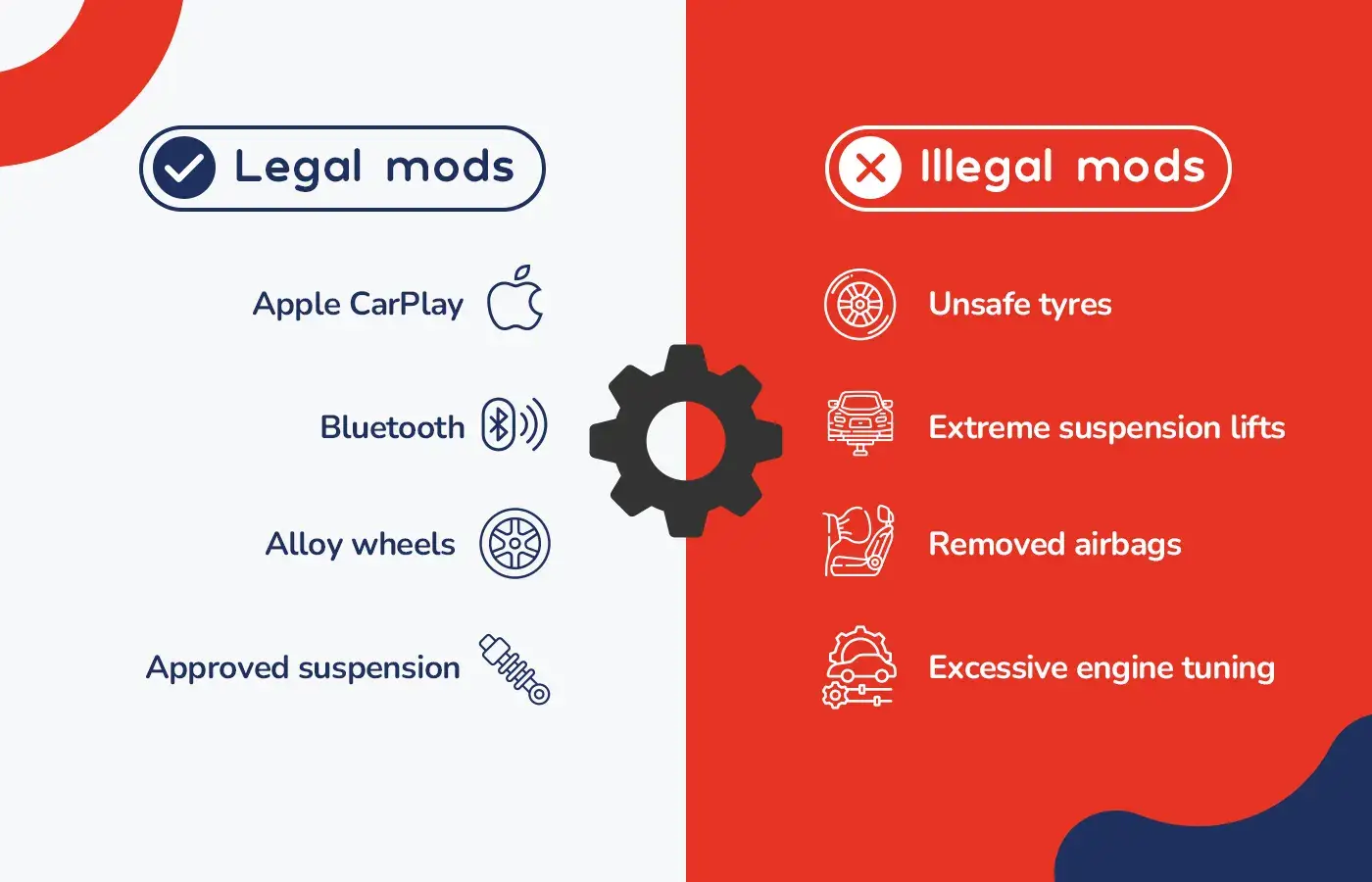
In Australia, some car modifications are legal if they meet Australian Design Rules (ADRs) and state road safety standards, while others are prohibited due to safety and environmental concerns.
The line between legal and illegal often comes down to whether the modification compromises safety, performance standards, or environmental regulations. Before making or selling a modified car, it’s essential to check local government guidelines or obtain certification for major changes.

Examples of legal modifications include:
- Installing Apple CarPlay or Bluetooth for convenience.
- Upgrading to alloy wheels or different tyres within size limits.
- Fitting new suspension or brakes that meet manufacturer and government guidelines.
- Adding interior features such as seat upgrades or improved lighting.
Examples of illegal modifications include:
- Excessive engine performance upgrades that breach emission standards.
- Removing or tampering with safety equipment such as airbags.
- Extreme suspension lifts or vehicle height changes beyond government limits.
- Using tyres that are unsafe or not approved for road use.
How do mods affect your resale value?
Modifications can both increase or decrease the resale value of your car, depending on the type of upgrade and the preferences of potential buyers.
Upgrades that improve safety or convenience, such as installing Bluetooth, Apple CarPlay, or upgrading tyres and brakes, can make the car more attractive in the used car market. These features often align with what buyers want and may help you sell your modified car more quickly.
However, performance modifications like engine swaps, turbochargers, or lowered suspension can reduce resale value. While they may appeal to a niche group of enthusiasts, they can also raise concerns about reliability, roadworthiness, and insurance. Some buyers may view these modifications as costly risks rather than improvements.
Ultimately, modifications affect value by shaping buyer interest and market demand. A car with tasteful, certified upgrades may achieve a higher price, while heavily altered vehicles may struggle to attract mainstream buyers or dealers.
What paperwork do you need to sell a modified car?
When selling a modified car in Australia, you need to prepare the same essential paperwork as with any vehicle sale, along with additional documents for the modifications.
Having this paperwork ready reassures potential buyers that your vehicle is compliant, safe, and legally transferable. It also helps avoid delays in the selling process and ensures a smooth, transparent transaction.
Standard documents include:
- Proof of identity (driver’s licence or photo ID).
- The vehicle’s registration certificate.
- A signed transfer of ownership form.
- A recent roadworthy certificate if required in your state.
For modified cars, you may also need:
- Certification paperwork if the upgrades involve major changes such as an engine replacement, suspension adjustment, or performance enhancement.
- Receipts or invoices for modifications, which provide buyers with proof of professional installation.
- Any warranty documents for parts or systems you’ve added, such as Bluetooth or Apple CarPlay units.
How to sell a modified car in Australia
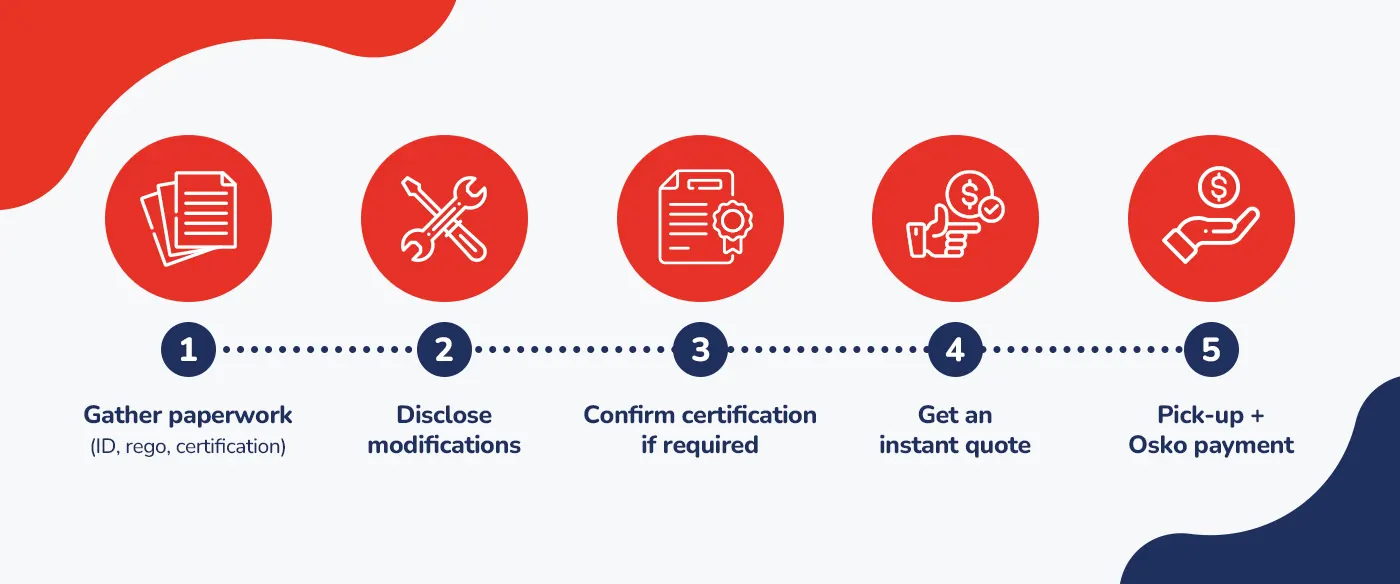
Selling a modified car is easier when you prepare the compliance records before approaching buyers. Follow these five steps from the infographic.
- 01
1. Gather your paperwork
Collect your proof of identity, registration papers and transfer documents. Add receipts, warranties, service records and any engineering or modification certificates linked to the upgrades.
- 02
2. Disclose the modifications
Give the buyer a clear list of significant changes to the engine, suspension, brakes, body, safety systems or electronics. Provide supporting invoices and certificates where available.
- 03
3. Confirm whether certification is required
Check the rules issued by your state or territory transport authority. If a major modification requires approval, arrange an inspection with an authorised engineer or certifier before completing the sale.
- 04
4. Get an instant quote
Provide the car’s make, model, year, kilometres, condition and modification details. Accurate information helps the buyer assess the vehicle and provide a more reliable offer.
- 05
5. Arrange pick-up and receive payment
If you accept the offer, confirm the collection details and prepare the keys and documents. Check that the secure Osko payment has reached your bank account before handing over the vehicle.
Do you need to disclose modifications to buyers?
You should disclose any significant modifications when selling a modified car in Australia. Sellers must not misrepresent a vehicle or provide misleading information about its condition. Failing to disclose important changes may lead to disputes or liability if the buyer later discovers undeclared modifications.
Examples of modifications that must be disclosed include:
- Engine changes or performance upgrades.
- Structural alterations such as suspension lifts or chassis adjustments.
- Safety-related changes, including brake or airbag modifications.
- Certified alterations requiring paperwork or government approval.
Being upfront about modifications builds trust with buyers and protects you legally. Provide copies of certification documents and invoices where relevant, so the buyer understands exactly what has been changed. This transparency helps you sell your car with confidence and ensures a smooth, dispute-free process.
What is certification, and when do you need it?
Certification is the official process of having a modified vehicle inspected and approved by an authorised certifier or engineer. In Australia, this step confirms that the car’s modifications meet government safety and performance standards, making it legal to drive and sell.
When certification is required
Certification is required when your modifications significantly affect the vehicle’s structure, safety systems, or performance. Common examples include:
- Major engine upgrades or replacements.
- Alterations to suspension or brakes that affect handling.
- Chassis or body changes that modify the car’s structure.
- Performance upgrades that impact safety or emissions.
Why certification matters
Without certification, a modified car may fail a roadworthy inspection or even be deemed unregistrable. This can stop the sale entirely. Certification provides official paperwork that proves compliance and reassures buyers that the vehicle is safe, legal, and ready for ownership transfer.
How to check your obligations
If you’re unsure whether your modifications require certification, review your state government’s guidelines or consult an accredited certifier. Taking this extra step ensures compliance and helps you sell your modified car with confidence.
Can 1800 Car Buyers purchase modified vehicles?
Yes, 1800 Car Buyers purchases modified vehicles across Australia. Whether your car has performance upgrades, aftermarket wheels, or interior improvements like Apple CarPlay, we make the selling process simple and straightforward.

Fast, fair & market-aligned offers
Skip the hassle of private listings and dealer negotiations. We evaluate your vehicle and its certified modifications to provide a competitive, instant quote.

Instant payment via Osko
Receive secure, instant payment directly to your bank account as soon as the sale is finalised—no waiting periods or hidden processing fees.

Free nationwide pickup
We handle the logistics by offering free vehicle removal anywhere in Australia, saving you time and money.

Broad vehicle acceptance
We accept a wide range of vehicles, including those with major certified modifications, provided they meet state roadworthiness and safety standards.
Table of contents


