


[section id="what-does-it-mean-to-sell-a-car-under-finance" format="overview"]
What does it mean to sell a car under finance?
Selling a car under finance means you’re trying to sell a vehicle that still has money owing on its loan. In Australia, this usually happens when you’ve taken out a car loan or another finance agreement and haven’t yet repaid it. In this situation, you don’t fully own the car; the finance company or lender retains a financial interest in the vehicle until the loan is cleared. This doesn’t necessarily mean your car can’t be sold. It simply means that the outstanding finance must be paid off before ownership can be transferred to a buyer.
Understanding what it means to sell a financed car is the first step toward avoiding legal or financial complications. Knowing that the loan must be settled before transfer of ownership allows you to approach the sale with confidence and transparency.
[/section]
[section id="can-you-legally-sell-a-financed-car-in-australia" format="overview"]
Can you legally sell a financed car in Australia?
Yes, you can legally sell a car under finance in Australia, but strict conditions must be met. When a vehicle is financed, the lender has a registered interest until the loan is fully repaid. You can’t transfer vehicle ownership to a new buyer until the outstanding loan is cleared.
Selling a financed car in Australia requires careful handling to ensure the process is legal. The key legal requirement is that you or the buyer pay off the finance during the sale. Once the lender confirms the loan is settled, their financial interest is removed, and the car's ownership can be legally transferred to the buyer.
It’s also important to be transparent with potential buyers that the car is still under finance. Disclosure protects both parties and ensures the buyer isn’t at risk of repossession later. By clearing the loan before ownership transfer, you protect yourself from legal disputes and give the buyer confidence in the transaction.
[/section]
[section id="how-do-you-get-a-payout-figure-from-your-lender" format="steps"]
How do you get a payout figure from your lender?
A payout figure is the amount you must pay your lender to clear the car loan fully. Getting this figure is essential if you want to sell a car under finance, as it tells you the exact loan balance that must be settled before ownership can be transferred.
To obtain a payout figure:
- Contact your lender directly: Call your bank or finance company, or log in to your online loan portal.
- Request a payout letter: This document outlines the remaining loan balance, including any interest or fees up to a specific date.
- Check the expiry date: Payout figures are usually valid for a limited time (often 7–14 days), after which you’ll need an updated figure.
- Keep it in writing: Always ask for the payout figure in writing so you have a record when negotiating with potential buyers or car-buying services.
The payout figure is important because it ensures the sale proceeds cover the outstanding loan. Knowing this number helps you decide whether to pay off the loan, use the buyer’s payment to clear it, or work with a professional car buyer to manage the process.
[/section]
[section id="step-by-step-guide-to-selling-a-financed-car" format="steps"]
Step-by-step guide to selling a financed car
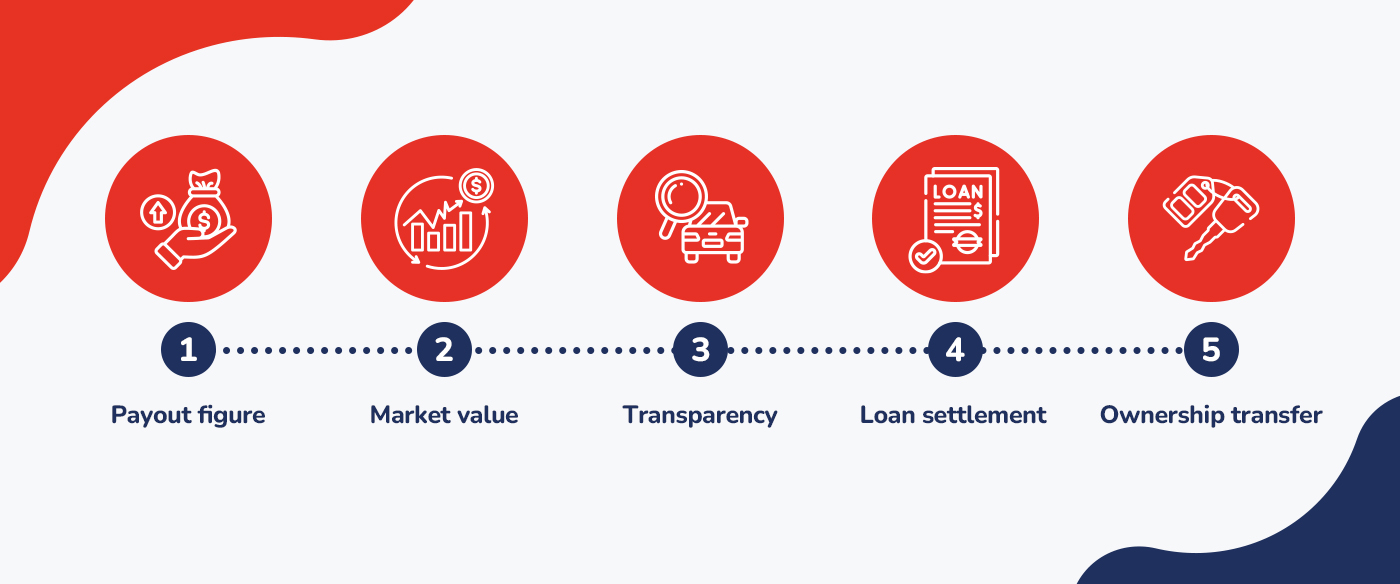
Selling a financed car involves a few essential steps, but it’s straightforward when you understand what’s required. Whether you’re planning a private sale or working with a professional car-buying service, here’s how to confidently sell your car under finance.
[section_inner_1 id="step-1-request-loan-payout-figure" format="overview"]
Step 1: Request a loan payout figure
Start by contacting your lender to request a payout figure. This is the exact amount you need to pay to clear the loan. Understanding this number helps you set realistic expectations for your sale and ensures you know how much of the sale proceeds will go toward paying off the financing.
[/section_inner_1]
[section_inner_1 id="step-2-check-car-market-value" format="overview"]
Step 2: Check your car’s market value
Determine your car’s current market value using online valuation services or professional appraisals. Compare this value to your loan payout figure to see if the sale will cover the loan or if additional funds might be needed. Remember, a car’s market value can vary based on its condition, age, and mileage. It’s important to understand that your vehicle isn’t worth overstating to potential buyers.
[/section_inner_1]
[section_inner_1 id="step-3-be-transparent-with-buyers" format="overview"]
Step 3: Be transparent with potential buyers
If you’re selling privately, informing potential buyers that the car is under finance is crucial. Transparency builds trust and reassures buyers that you’re handling the transaction responsibly. Many buyers are comfortable purchasing a financed car if the process is straightforward.
[/section_inner_1]
[section_inner_1 id="step-4-coordinate-payout-with-buyer" format="overview"]
Step 4: Coordinate the payout with the buyer
During the sale, arrange for the buyer’s payment to go directly to your lender to settle the loan. Once the lender confirms the loan is cleared, the buyer can transfer ownership. This step ensures the transaction is smooth and eliminates any legal complications.
[/section_inner_1]
[section_inner_1 id="step-5-transfer-ownership" format="overview"]
Step 5: Transfer ownership
After the lender confirms the loan is paid off, complete the transfer of ownership through your state’s registration authority. This makes the new owner the legal holder of the car.
[/section_inner_1]
[/section]
[section id="what-if-your-payout-is-more-than-the-cars-value" format="mixed"]
What if your payout is more than the car’s value?
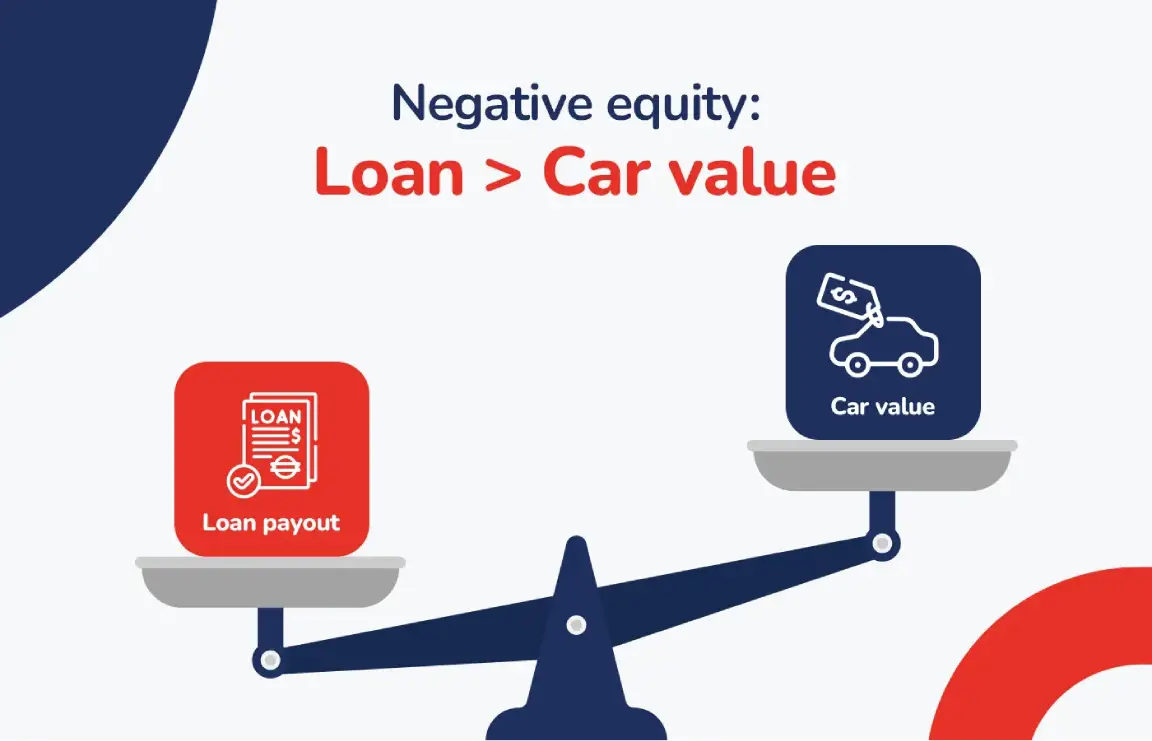
If your payout figure is higher than your car’s current market value, you’re in a situation called negative equity. This means the outstanding loan balance is greater than what you can expect to receive from selling the car.
This doesn’t mean you can’t sell a financed car, but you’ll need to cover the shortfall. For example, if your payout figure is $18,000 and the car’s market value is $15,000, you’ll need to pay your lender the extra $3,000 to clear the loan. Only once the loan is settled can ownership of the car be transferred to the buyer.
In some cases, you may be able to:
- Use savings or personal funds to pay the difference and clear the loan.
- Roll the negative equity into a new car loan if you upgrade to a new vehicle (subject to lender approval).
Being upfront with potential buyers that the car is still under finance is critical. By planning for the payout and covering the gap, you can avoid complications and complete the sale legally and confidently.
[/section]
[section id="can-the-buyer-pay-off-your-car-loan-directly" format="mixed"]
Can the buyer pay off your car loan directly?
Yes, a buyer can pay off your car loan directly, and in fact, this is one of the safest ways to sell a car under finance. In this arrangement, the buyer transfers the agreed purchase amount directly to your lender to clear the loan. Once the loan is fully repaid, the lender removes their financial interest in the vehicle, and the transfer of ownership to the buyer can proceed.
This process offers several benefits:
- Security for the buyer: They know the car is free from outstanding finance before they take ownership.
- Clarity for the seller: The loan is settled at the point of sale, reducing the risk of complications.
- Transparency for both parties: The transaction is documented, ensuring no disputes about whether the loan was cleared.
It’s important to explain this option to potential buyers, as some may be unfamiliar with how financed car sales work. Providing a payout letter from your lender and coordinating payment directly with them helps build trust and confidence.
If managing this privately feels overwhelming, professional services like 1800 Car Buyers handle loan payouts as part of the sale process, making it even easier to sell your car under finance without stress.
[/section]
[section id="should-you-pay-off-the-car-before-selling" format="mixed"]
Should you pay off the car before selling?
It’s not always necessary to pay off a car loan before selling, but doing so can simplify the process. If you clear the loan first, the car is no longer encumbered, and you can transfer ownership to the buyer without involving your lender. This can reassure potential buyers who prefer purchasing a car with no outstanding finance.
However, paying off the loan before selling isn’t the only option. Many Australians successfully sell a car under finance by using the buyer’s payment to clear the loan at the point of sale. In this case, the lender is paid directly, the finance is removed, and the car's ownership can then be transferred.
Whether you should pay off the car in advance depends on your circumstances:
- If you have savings available: Paying off the loan first can speed up the sale and simplify the transaction.
- If you’d rather avoid using personal funds: You can coordinate the sale so the buyer or a professional car-buying service pays the lender as part of the transaction.
Both methods are legal, as long as the outstanding finance is cleared before the ownership transfer. The most important step is being transparent with the buyer and ensuring the loan is settled during the sale.
[/section]
[section id="what-are-the-risks-of-selling-a-car-with-finance-owing" format="mixed"]
What are the risks of selling a car with finance owing?
Failing to disclose outstanding finance when selling a car can have serious legal and financial consequences. If the car is still encumbered, the lender has the right to repossess it, even if it has already been sold to a new owner. This leaves both the buyer and the seller exposed to unnecessary risks.
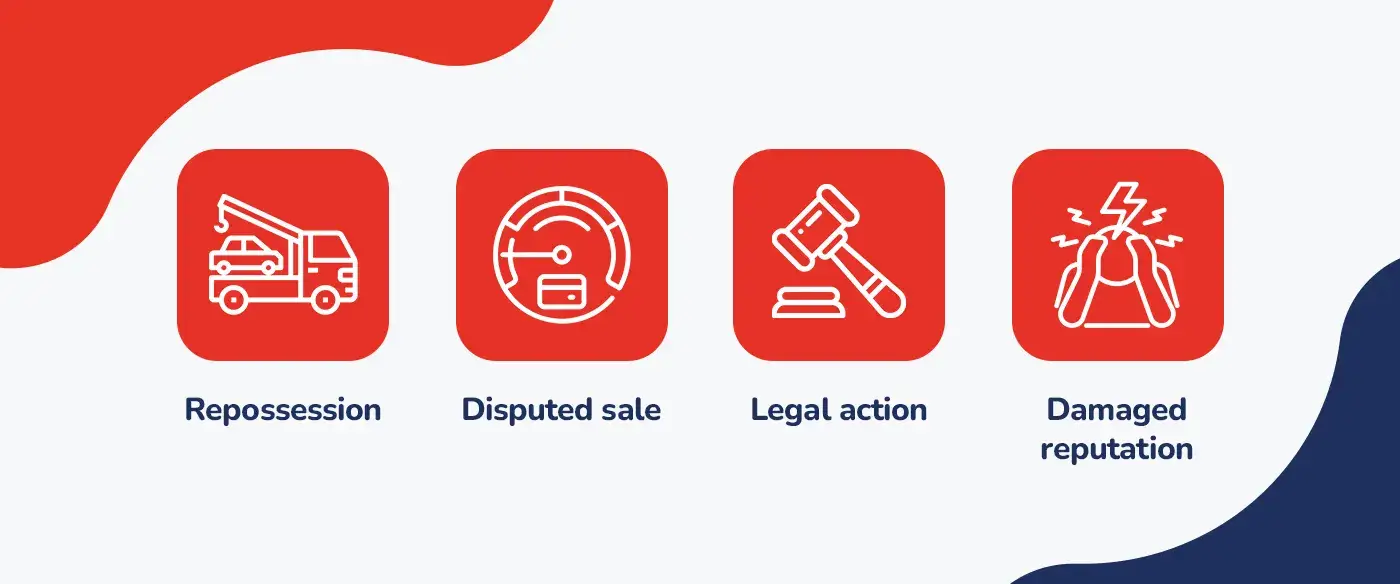
The main consequences of not disclosing finance include:
- Repossession of the car: The lender can repossess the vehicle from the buyer if the loan hasn’t been settled.
- Invalid or disputed sale: Because ownership can’t be legally transferred until the loan is cleared, the sale may be deemed invalid.
- Legal action from the buyer: Buyers who lose the car may take legal action against you for failing to disclose its finance status.
- Damage to your reputation and credit rating: Attempting to sell a car with hidden finance can damage your credibility and impact your credit history.
To protect yourself, always disclose finance owing and ensure the loan is cleared as part of the sale process. This transparency reassures potential buyers and avoids costly disputes later.
[/section]
[section id="do-you-need-to-tell-the-buyer-that-there-is-finance-owing" format="mixed"]
Do you need to tell the buyer that there is finance owing?
Yes, you are legally required to disclose if there is finance owing on a car you’re selling. When a car is encumbered, the lender has a legal interest in the vehicle until the loan is cleared. If you don’t tell the buyer, you risk selling a car that the lender could repossess later, leading to legal disputes and financial losses for both parties.
Being upfront about outstanding finance is not just a legal obligation; it’s also the best way to build trust with potential buyers. Many buyers are open to purchasing a financed car, as long as the process for clearing the loan is explained clearly.
The safest way to manage disclosure is to:
- Provide the buyer with a payout letter from your lender.
- Offer to share a PPSR certificate, which shows the car’s finance status.
- Explain how the loan will be settled before the transfer of ownership.
By being transparent about the car’s finance status, you reassure buyers that the sale is legitimate and protect yourself from future disputes.
[/section]
[section id="what-happens-if-you-dont-disclose-finance" format="mixed"]
What happens if you don’t disclose finance?
There are significant legal and financial implications if the loan you owe isn’t cleared or disclosed as part of the sale. Here’s what you need to know about the risks of selling a financed car and the potential outcomes if the process isn’t managed properly.
[section_inner_1 id="who-owns-the-financed-car" format="overview"]
Who owns the financed car?
If your car is under finance, then you don’t own the car. Technically, the lender owns the vehicle till you’ve paid it off. This means you cannot transfer full ownership to the buyer until the outstanding loan has been cleared. If you attempt to sell the car while it’s still under finance without disclosing its encumbrance, the sale could be invalid, and legal action may follow.
[/section_inner_1]
[section_inner_1 id="why-is-clearing-the-loan-essential" format="overview"]
Why is clearing the loan essential?
To protect yourself and the buyer, the loan must be settled as part of the sale process. This involves using either your own funds or the buyer’s payment to pay off the remaining balance with the lender. Once the loan is cleared, the lender will release their financial interest in the vehicle, allowing the ownership to be legally transferred to the buyer.
[/section_inner_1]
[/section]
[section id="state-by-state-guide-to-selling-a-car-under-finance-in-australia" format="mixed"]
State-by-state guide to selling a car under finance in Australia
Selling a financed car in Australia requires careful attention to the rules and processes in your state or territory. Each jurisdiction has specific requirements you have to meet to sell your car, from clearing the loan to transferring ownership. Below, we’ve outlined key steps for each state along with resources to ensure you have all the information you need.
[section_inner_1 id="how-to-sell-car-finance-victoria" format="ol"]
How to sell a car under finance in Victoria
To sell your car in Victoria, you must disclose any outstanding finance on the car to the buyer. A Section 32 Certificate may be required to legally declare the car’s financial status. The loan must be cleared before ownership can be transferred to the buyer.
To complete the sale:
- Request a payout figure from your lender and plan to clear the loan as part of the transaction.
- Notify the buyer of the car’s encumbrance and ensure transparency throughout the process.
- Use VicRoads’ vehicle transfer guide to manage ownership transfer once the loan is paid off.
[/section_inner_1]
[section_inner_1 id="selling-car-finance-nsw" format="ol"]
Selling a financed car in New South Wales
To sell your car in NSW, you need to ensure buyers are informed about any finance issues with the vehicle. Checking the car’s status on the Personal Property Securities Register (PPSR) is an important step, as it verifies whether the car is encumbered. The Roads and Maritime Services (RMS) oversees the transfer of registration.
Steps to follow:
- Clear the loan with the payout figure provided by your lender.
- Inform the buyer about the car’s finance status using a PPSR report.
- Transfer ownership through the Transport for NSW portal, ensuring all necessary documentation is submitted.
[/section_inner_1]
[section_inner_1 id="selling-car-finance-queensland" format="ol"]
Selling a car under finance in Queensland
Selling a car in Queensland requires a safety certificate, even if it is under finance. This certificate assures buyers that the vehicle meets minimum safety standards. Additionally, the loan must be cleared before registration can be transferred.
To complete the sale:
- Obtain a safety certificate and provide it to the buyer as part of the sale.
- Coordinate with your lender to pay off the loan during the sale.
- Finalise the transfer of registration with the Department of Transport and Main Roads (TMR) via their vehicle registration services.
[/section_inner_1]
[section_inner_1 id="selling-car-finance-south-australia" format="ol"]
How to sell a financed car in South Australia
To sell a car in South Australia, you are required to clear any outstanding finance before the ownership transfer is completed. Transparency about the car’s financial status is critical for a smooth transaction.
Here’s what to do:
- Use the PPSR to check the car’s encumbrance and share this information with the buyer.
- Pay off the loan to ensure the lender releases the car’s ownership.
- Complete the registration transfer with the buyer through the SA government website.
[/section_inner_1]
[section_inner_1 id="selling-car-finance-western-australia" format="ol"]
Selling a car with outstanding finance in Western Australia
When selling a car in WA, all outstanding finance must be cleared before selling a car. Buyers are advised to check the PPSR to verify the car’s status, and the transfer of ownership is managed through the Department of Transport.
Steps to take:
- Settle the loan with your lender and confirm the encumbrance has been removed.
- Provide the buyer with proof of the loan’s settlement if requested.
- Use the WA Department of Transport online portal to finalise the ownership transfer.
[/section_inner_1]
[section_inner_1 id="selling-car-finance-tasmania" format="ol"]
How to sell a financed car in Tasmania
To sell your car in Tasmania, you need to pay off any existing car loan before transferring ownership. It’s also critical that the buyer is informed that they’re about to buy a car that’s under finance.
How to proceed:
- Request a payout figure and settle the loan with your lender during the sale.
- Ensure all registration documents are in order for the buyer.
- Use the Tasmanian Department of State Growth services to manage the transfer of ownership.
[/section_inner_1]
[section_inner_1 id="selling-car-finance-act" format="ol"]
Selling a car under finance in the Australian Capital Territory
To sell your car in the ACT, clearing the loan is a mandatory step before ownership can be transferred. Buyers are encouraged to use the PPSR to verify that the car is free of encumbrances.
To sell your car:
- Pay off the loan and request confirmation from your lender.
- Provide buyers with any required documentation to ensure transparency.
- Finalise the transfer through Access Canberra, the ACT’s vehicle management authority.
[/section_inner_1]
[section_inner_1 id="selling-car-finance-nt" format="ol"]
Selling a car under finance in the Northern Territory
When selling your car in the NT, you must ensure all finance on the vehicle is settled before the sale is completed. Buyers may use the PPSR to check the car’s financial status.
Key steps:
- Clear the loan and confirm the car is no longer encumbered.
- Provide the buyer with any necessary proof of settlement.
- Transfer ownership through the NT’s Motor Vehicle Registry.
[/section_inner_1]
Selling a financed car requires careful preparation, but these steps ensure a smooth and legal transaction. Use the resources provided above to navigate the specific requirements in your state or territory, and reach out to 1800 Car Buyers for expert assistance in selling your financed vehicle quickly and confidently.
[/section]
[section id="whats-the-safest-way-to-sell-a-car-with-finance" format="steps"]
What’s the safest way to sell a car with finance?
The safest way to sell a car under finance is to settle the loan as part of the sale and keep the process transparent from start to finish. This ensures the lender’s interest in the vehicle is cleared before the buyer takes ownership, protecting both parties from legal or financial complications.
Here are the best practices for selling safely:
- Get a payout figure from your lender: Know exactly how much is required to clear the loan.
- Share the finance details with the buyer: Be transparent that the car is under finance and explain how the loan will be paid off.
- Arrange direct payment to the lender: Have the buyer’s funds go directly to the finance company to settle the loan.
- Provide proof of loan clearance: Show the buyer documentation confirming the car is free from encumbrance.
- Complete the transfer of ownership: Once the loan is cleared, finalise registration transfer through your state’s road authority.
[/section]
[section id="can-1800-car-buyers-buy-a-car-under-finance" format="cta"]
Can 1800 Car Buyers buy a car under finance?
Yes, 1800 Car Buyers can buy cars that are still under finance. As part of our fully digital process, we handle the loan payout directly with your lender, making the transaction simple, secure, and stress-free.
Our team specialises in handling these transactions transparently and efficiently, so you can avoid the stress and focus on moving forward. From fast quotes to secure Osko payments, we’re here to guide you through every step.
Whether you’re using the buyer’s payment to clear your personal loan, navigating the legal requirements in your state, or ensuring a smooth ownership transfer, preparation is key to a successful sale.
Ready to sell your financed car? Contact us today to get a competitive quote and let us take care of the rest.

[/section]
Table of contents

